



DIY guideSink valves
Water under the sink: find where it's coming from
Empty the cabinet, dry everything, then check each line and pipe one at a time until you see where the water starts.
- 15 to 30 min
- 7 steps
- Every step animated
7 steps
Tap a step to watch it again.
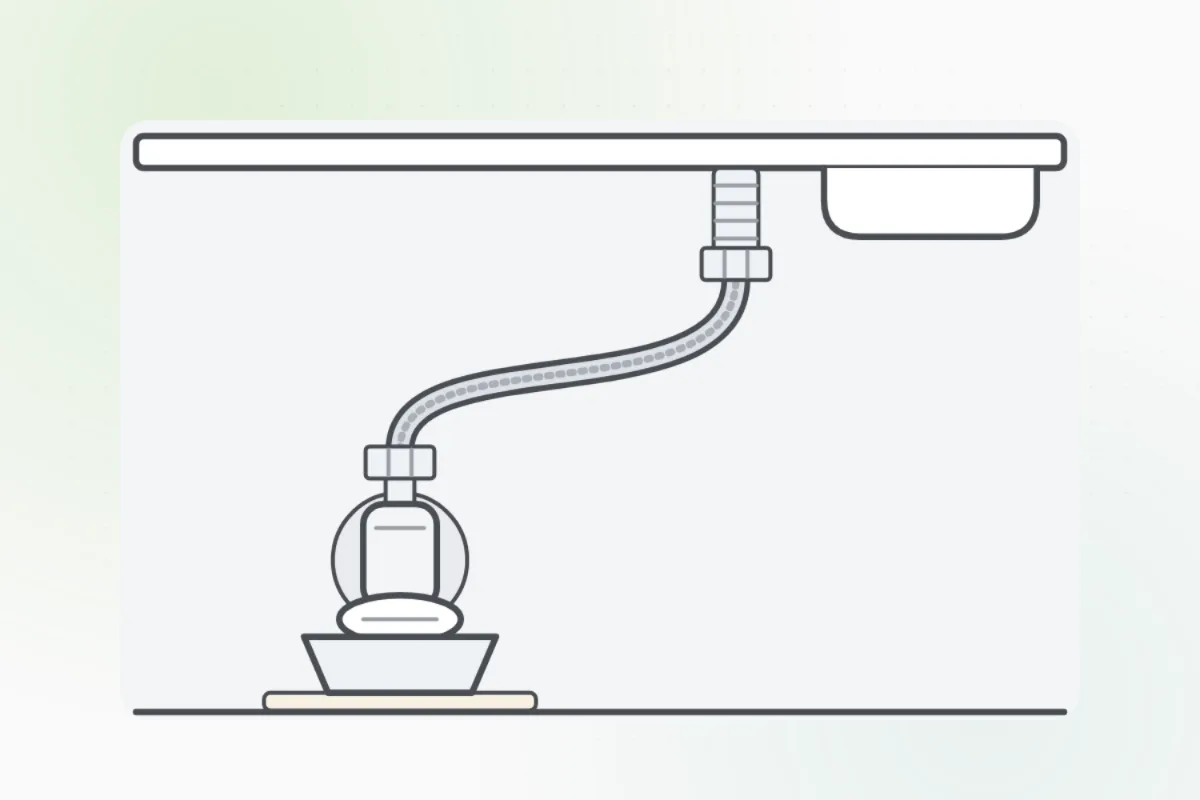
Take everything out from under the sink and set a towel or a shallow pan on the cabinet floor.
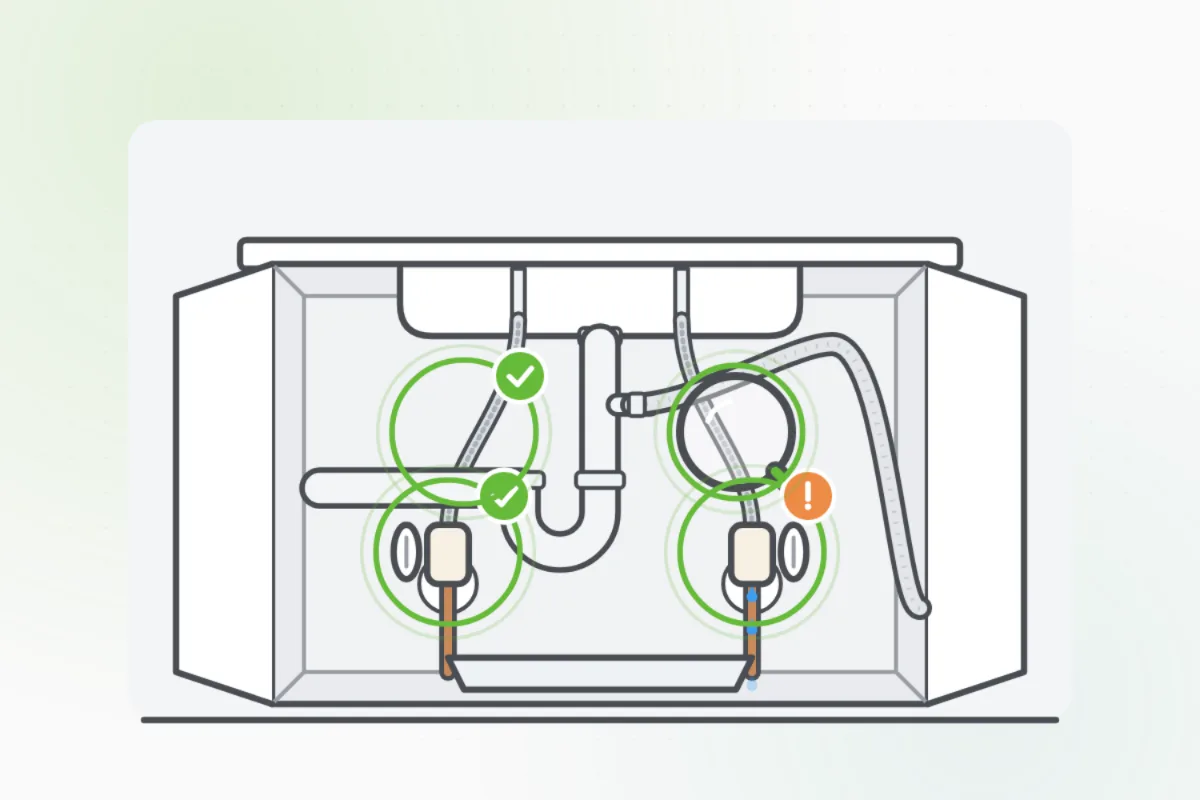
Water near an outlet or a disposal's cord? Don't touch it: switch that circuit off first.Wipe the valves, the supply lines, the drain pipes and the cabinet floor completely dry.
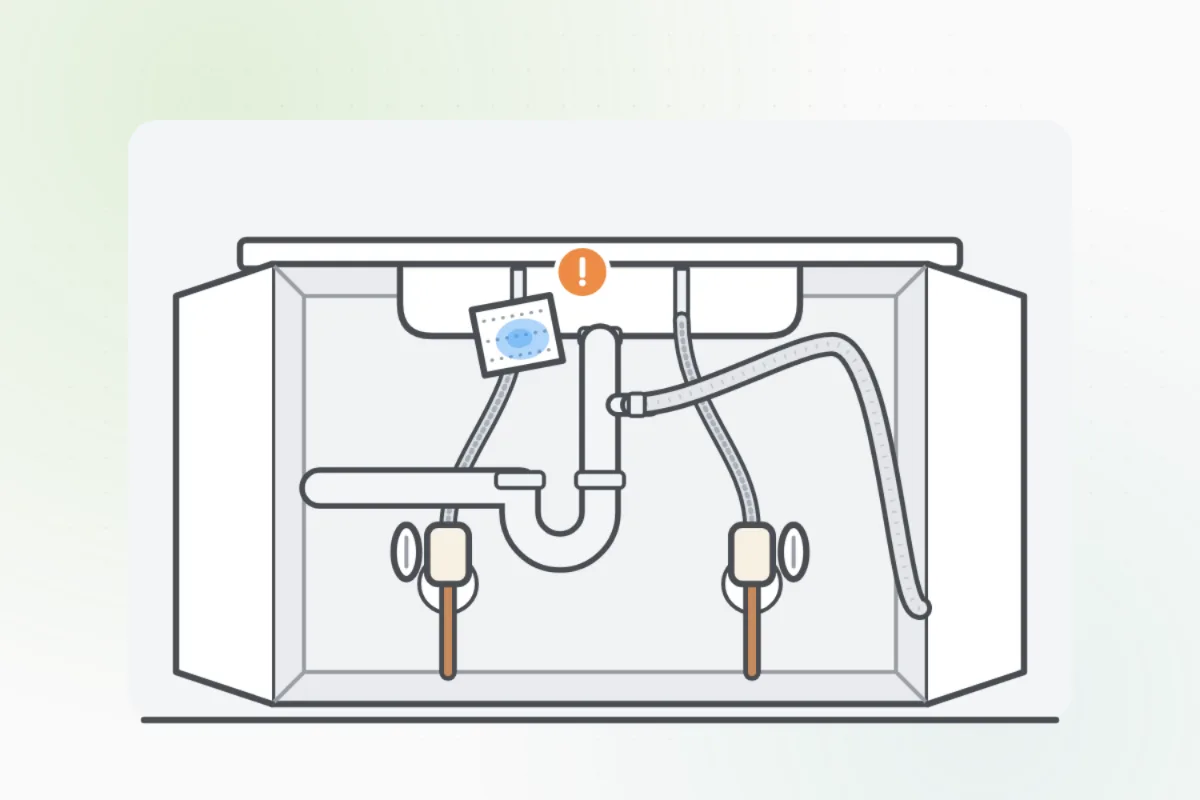
Run a dry tissue over each valve and up each line to the faucet. A wet tissue shows the leak, even with the taps off.
Fill the sink a little, pull the plug, and watch the trap and the drain pipe as it empties. Drops at a joint mean the drain.
If a dishwasher drains into this sink, run it and watch its hose where it joins the drain.
For a supply leak, turn both valves clockwise until they stop. A drain leak stops when nobody uses the sink.
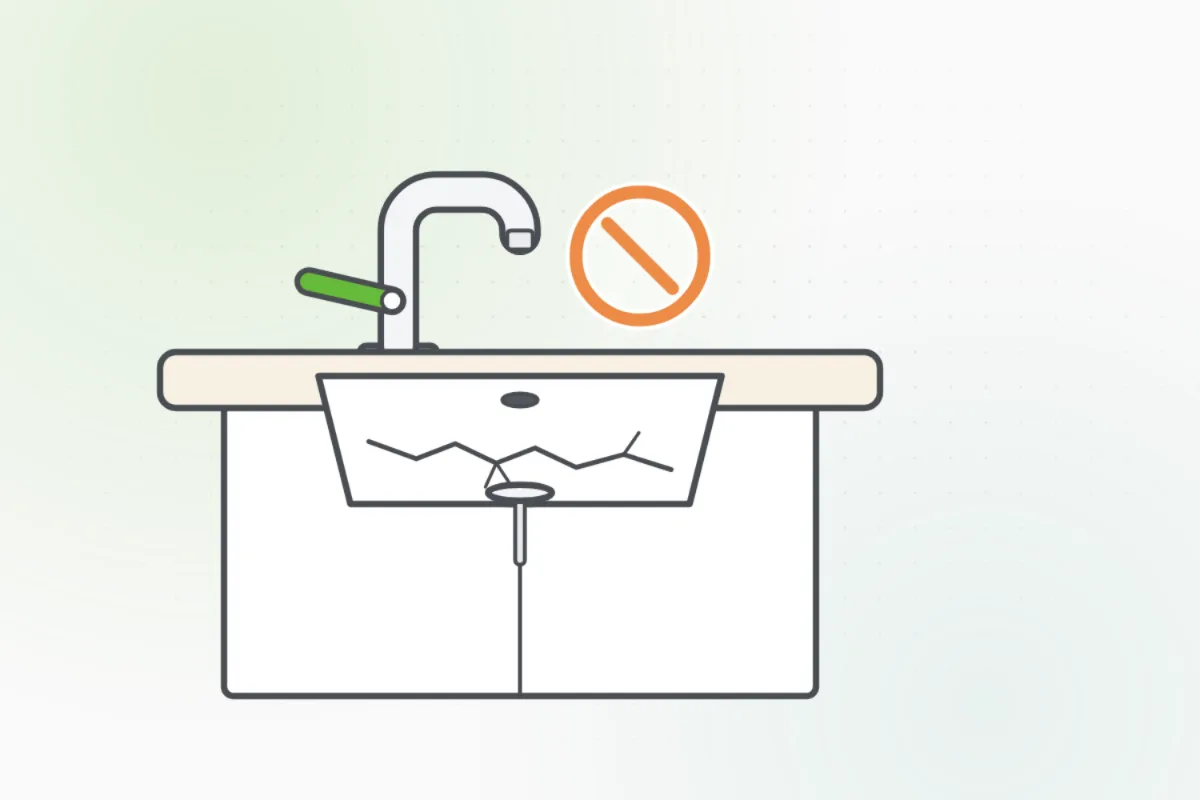
Turn them by hand. Forcing an old valve can crack it.Water still coming with the valves closed, a cracked pipe, or a leak from the faucet itself: ask Handyman for a plumber.
What you need
- A towel or a shallow pan
- Paper towels or tissue
- A flashlight
Call a pro if
- Water keeps coming with the valves closed
- A pipe or the trap is cracked
- The cabinet floor is soft or swollen
- The leak comes from the faucet, above the counter

Handyman says: Valves shut. I'll find a plumber.
Free for every home. Handyman asks a few questions, then books a pro it trusts.
More water and plumbing guides
See all 83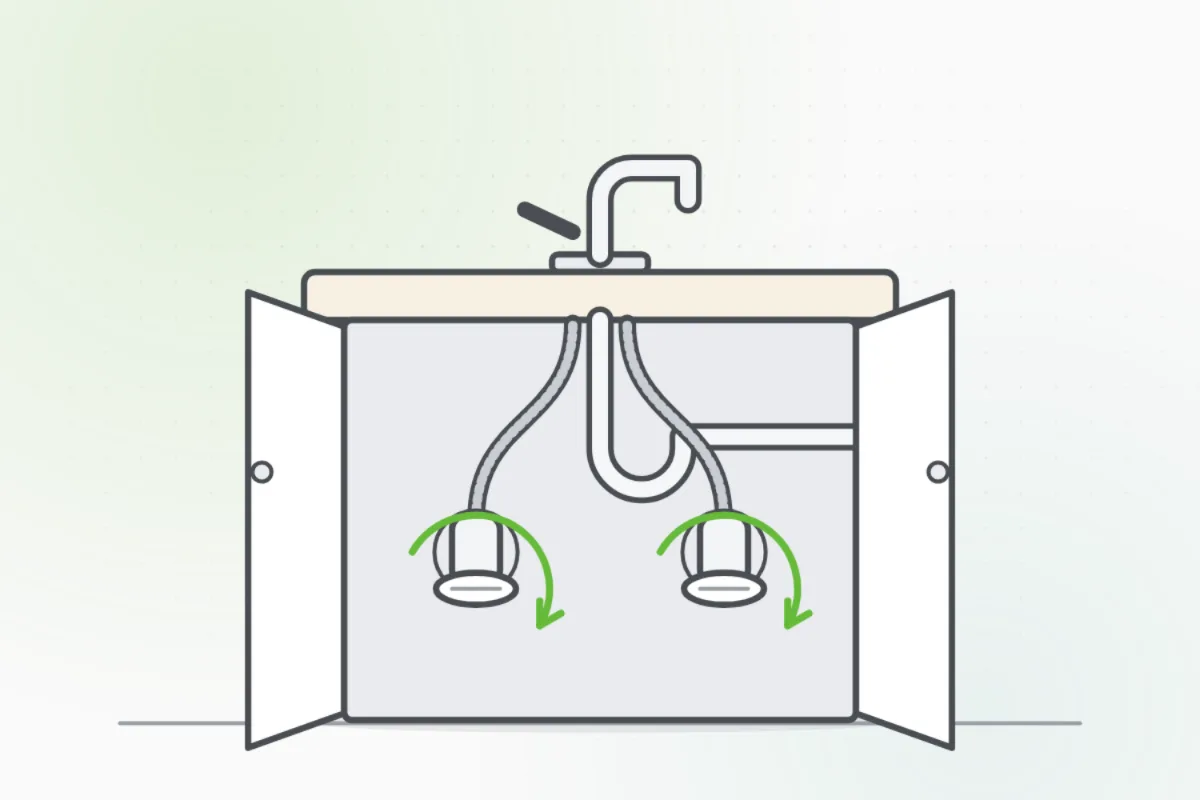
Rather have
a pro do it?