



What’s involvedWater supply
Look over the well pump, its seal and the foot valve: what's involved
What the well pump and its foot valve do, the signs they need a look, what a well pro does, and what to have ready. No hands-on steps: the pump is a pro's.
- 10 to 15 min
- 7 parts
- Every step animated
What’s involved
No hands-on steps here: what the job is, what a pro does, and what to have ready.
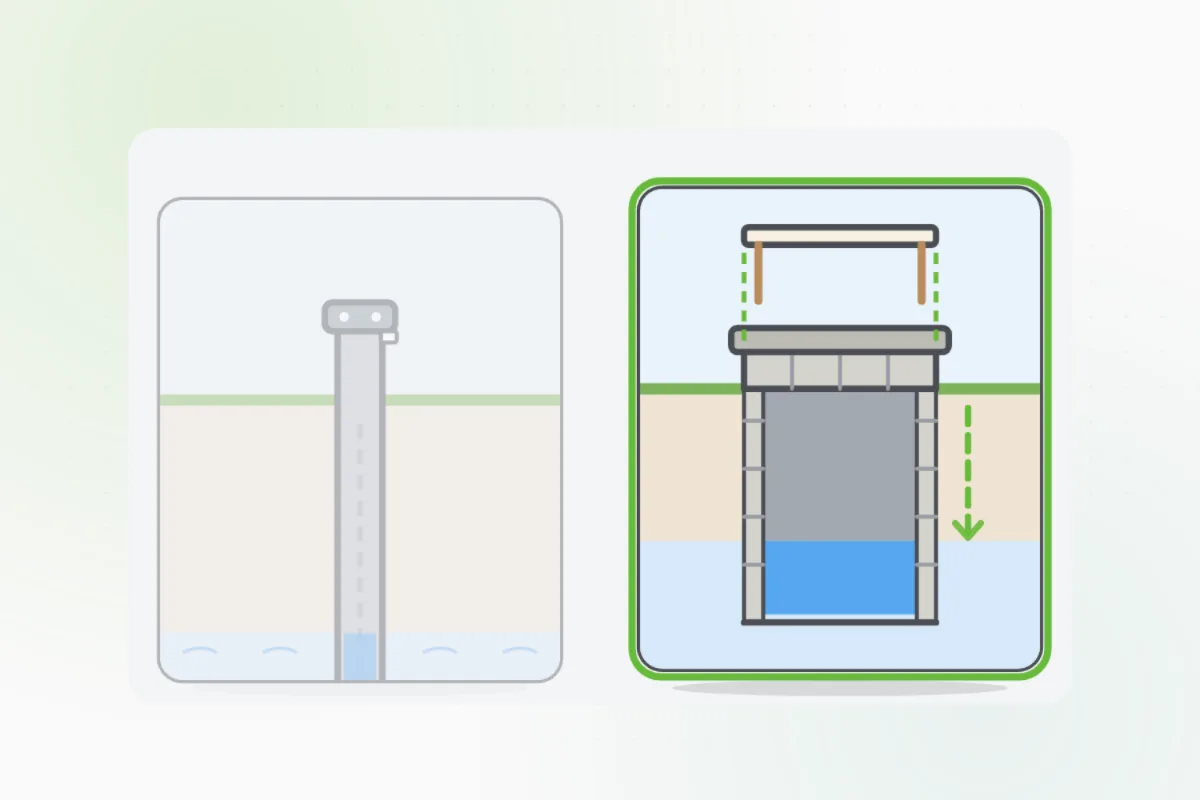
The well pump lifts water into the pressure tank. A foot valve at the bottom of the pipe stops it draining back down.
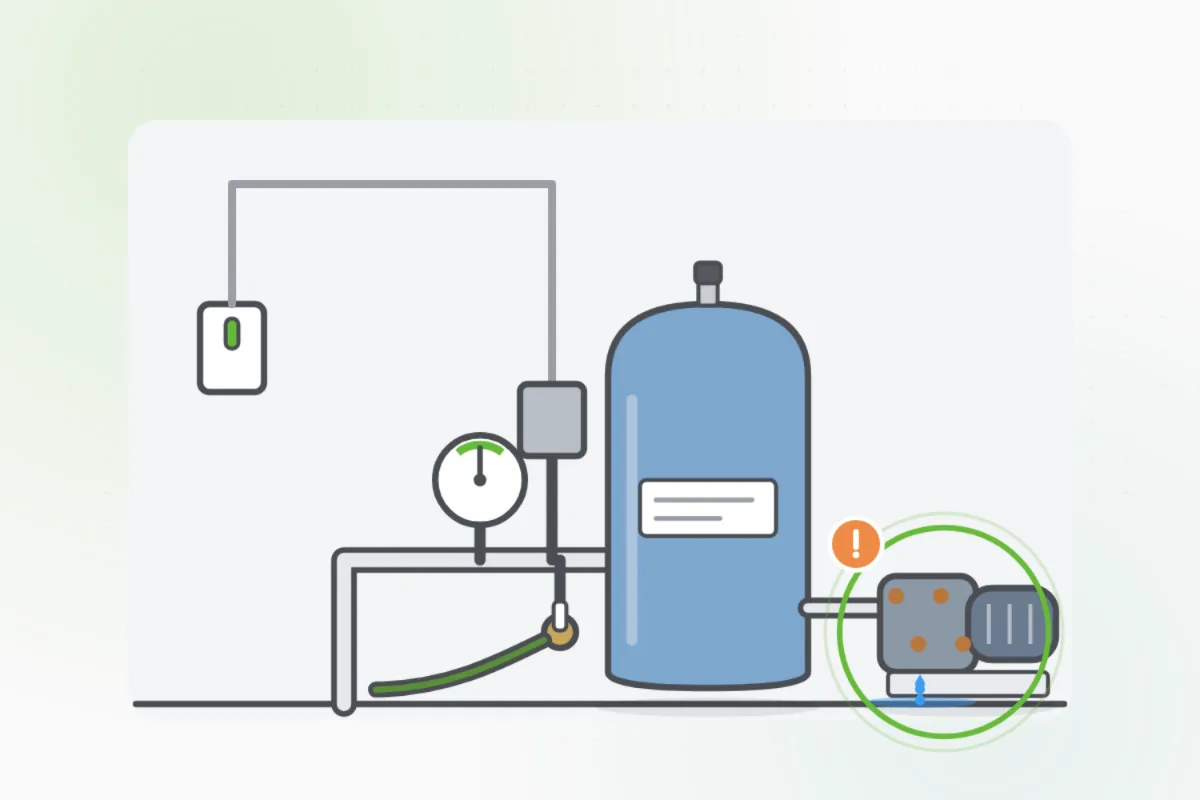
A jet pump sits by the pressure tank, a motor on one end. No pump there means it's down in the well.
From a step back, look for drips under the pump, rust, or a damp floor.
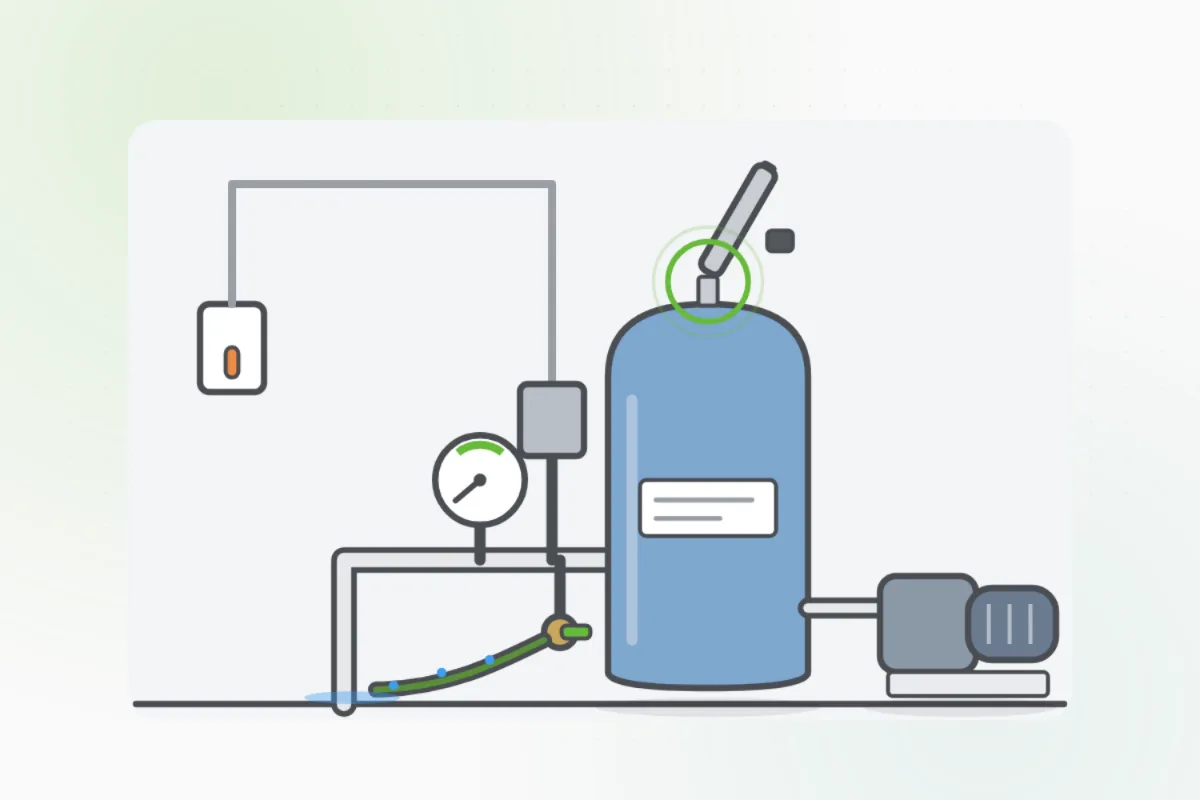
It runs on its own high-voltage circuit: don't open it or touch its wires.Clicking on and off fast, pressure lost overnight, taps spitting air, or running without stopping.
They test the switch and the tank, check the pump's seal and the foot valve, and lift the pump out if it's down the well.
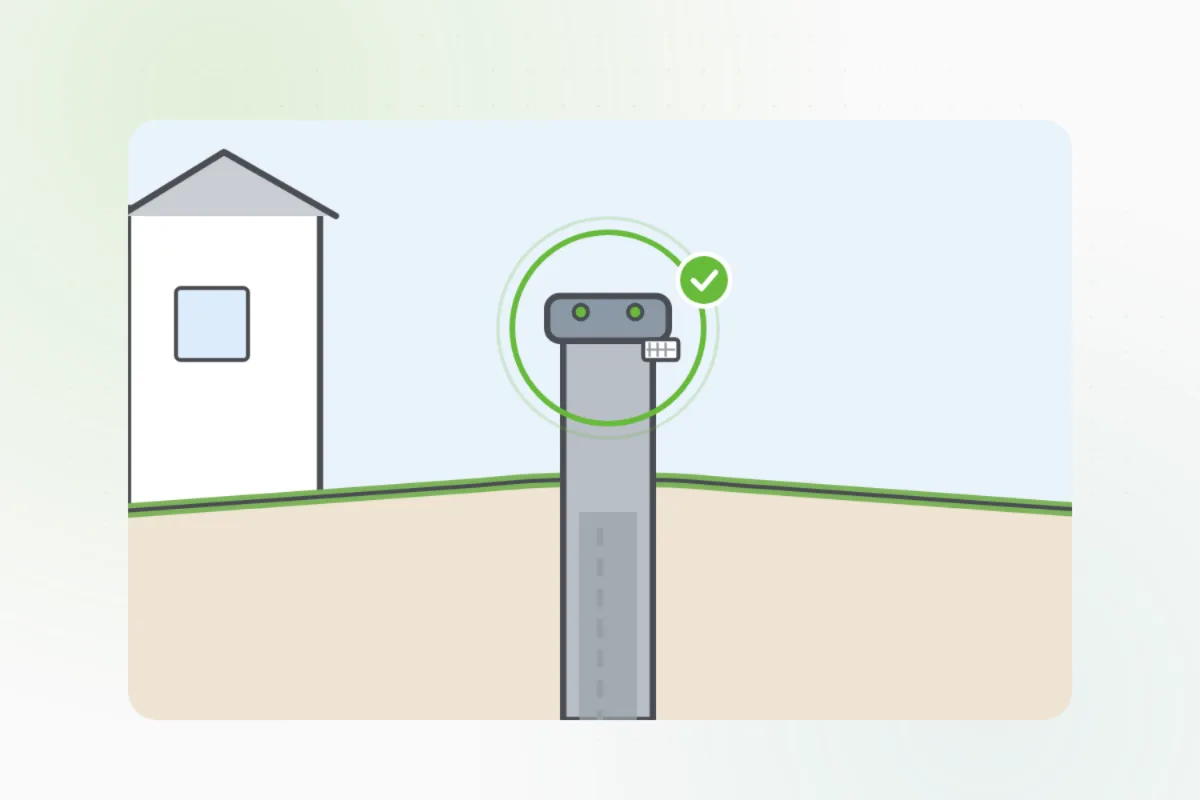
Clear a path to the tank and the wellhead, and note when the trouble started and what you heard.
No water, nonstop running, or a burning smell: turn off its breaker and ask Handyman for a well pro.
What you need
- Nothing: a well pro brings the tools
Call a pro if
- The pump clicks on and off fast
- The pressure drops overnight
- The taps spit air
- The pump runs without stopping
- There's no water

Handyman says: Switch it off. I'll find a well pro.
Free for every home. Handyman asks a few questions, then books a pro it trusts.
More water and plumbing guides
See all 83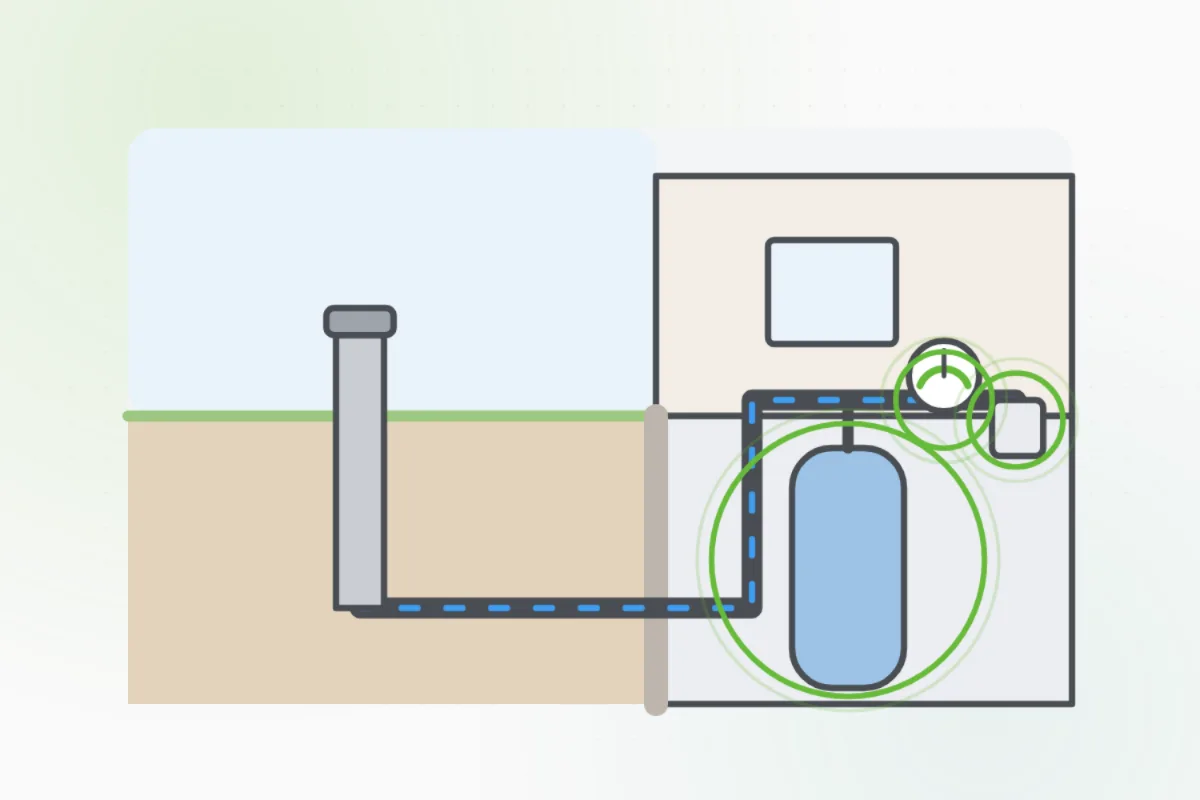
Rather have
a pro do it?