



DIY guideWater supply
Find the well pump and check the pressure tank's air charge
Find the well's pump and pressure tank, switch the pump off, drain the tank and read its air valve with a tire gauge, adding air if it's low.
- 20 to 40 min
- 7 steps
- Every step animated
7 steps
Tap a step to watch it again.
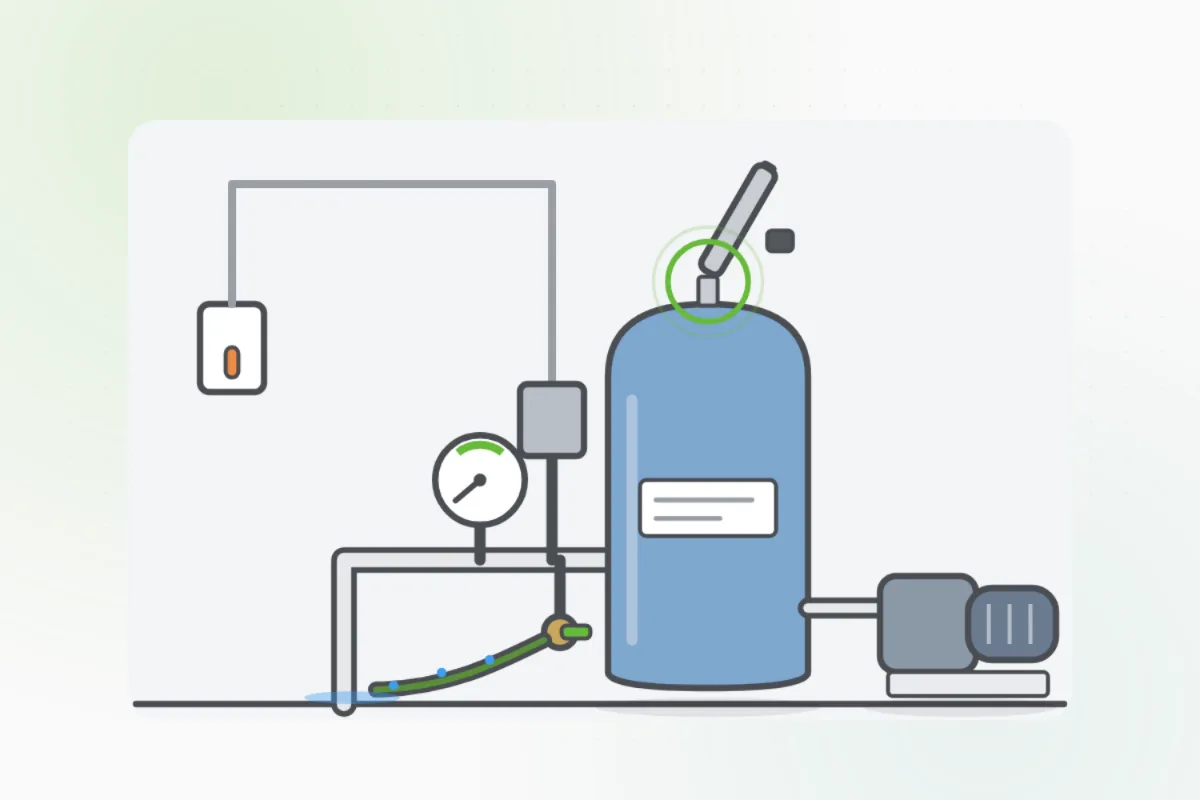
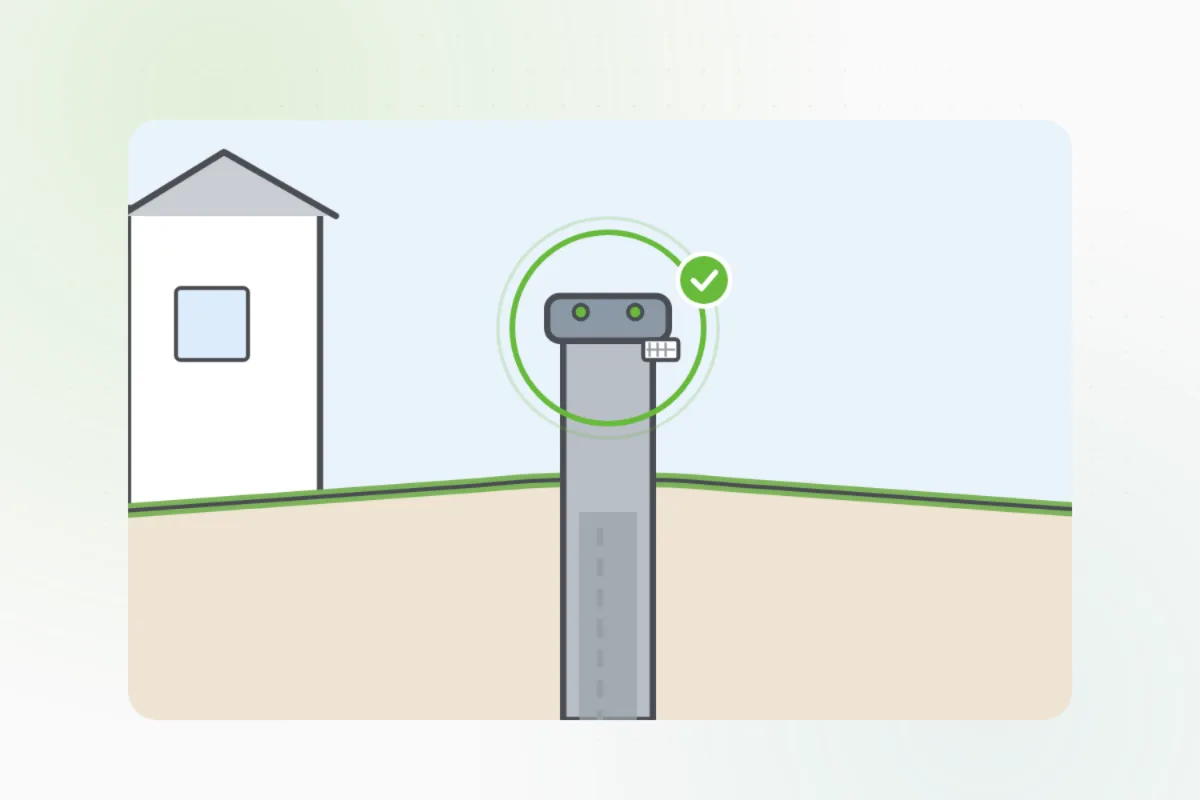
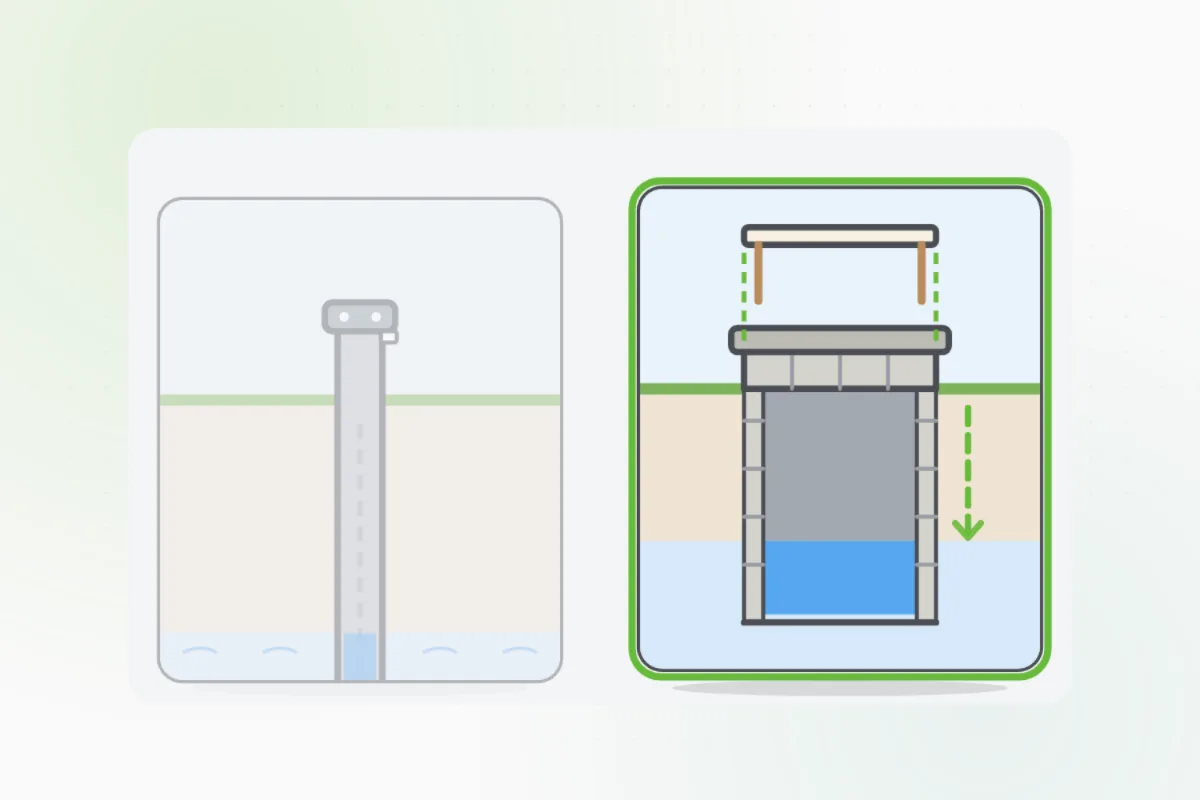
Find the pressure tank where the water comes in, with its gauge and small switch box. A motor beside it is a jet pump; none means the pump is down the well.
Turn off the pump's own switch or its breaker, so it can't start while the tank is empty.
Don't open the pressure switch's cover.Open the tap nearest the tank, or its drain with a hose on it, until the water stops and the gauge drops to the bottom.
Take the cap off the tire valve on the tank and press a tire gauge onto it.
Below the pressure on the tank's label? Add air with a bike pump until it matches. A constant-pressure system's manual names its own.
Cap the valve, close the tap, switch the pump back on, and watch the gauge climb until the pump stops.
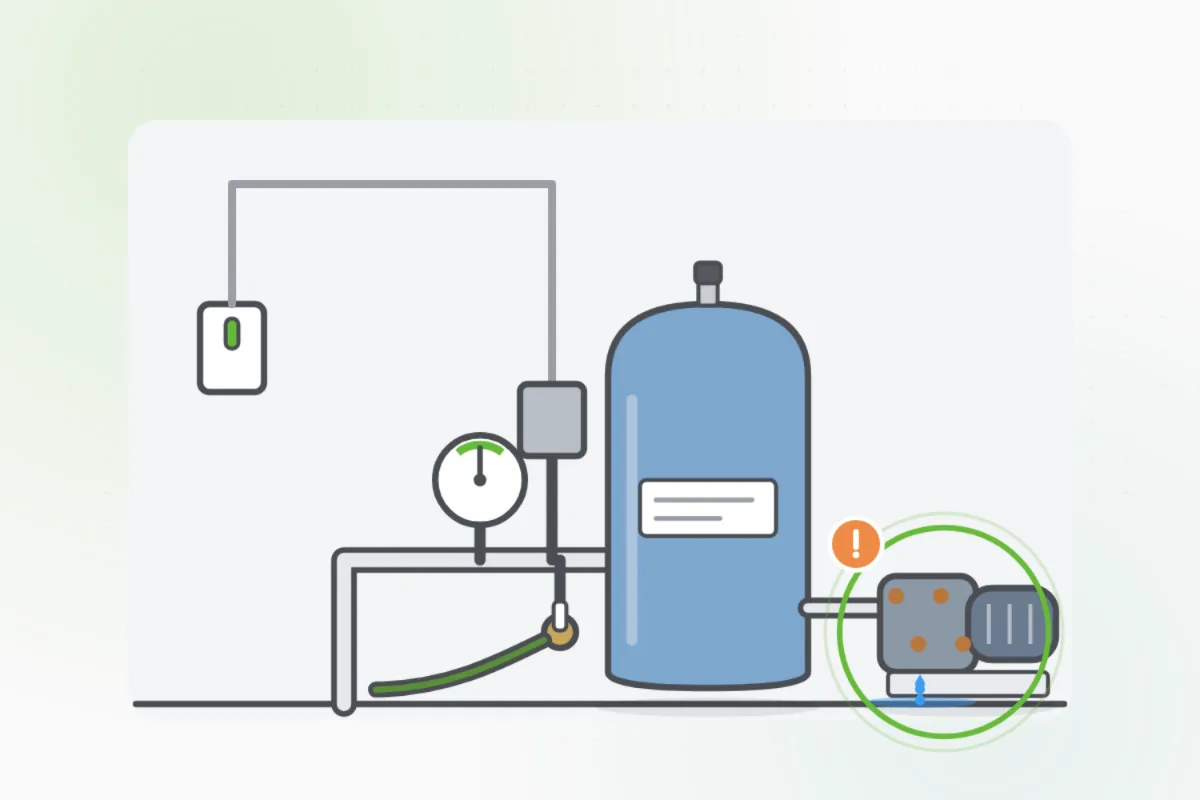
Water from the air valve, or the pump clicking on and off fast: the tank's bladder may be gone. Ask Handyman for a well pro.
What you need
- A tire pressure gauge
- A bike pump or a small compressor
- A hose, if the tank's drain is at its base
Call a pro if
- Water comes out of the air valve
- The pump clicks on and off every few seconds
- The pressure won't build back up
- No water at the taps

Handyman says: Water at the valve? I'll find a well pro.
Free for every home. Handyman asks a few questions, then books a pro it trusts.
More water and plumbing guides
See all 83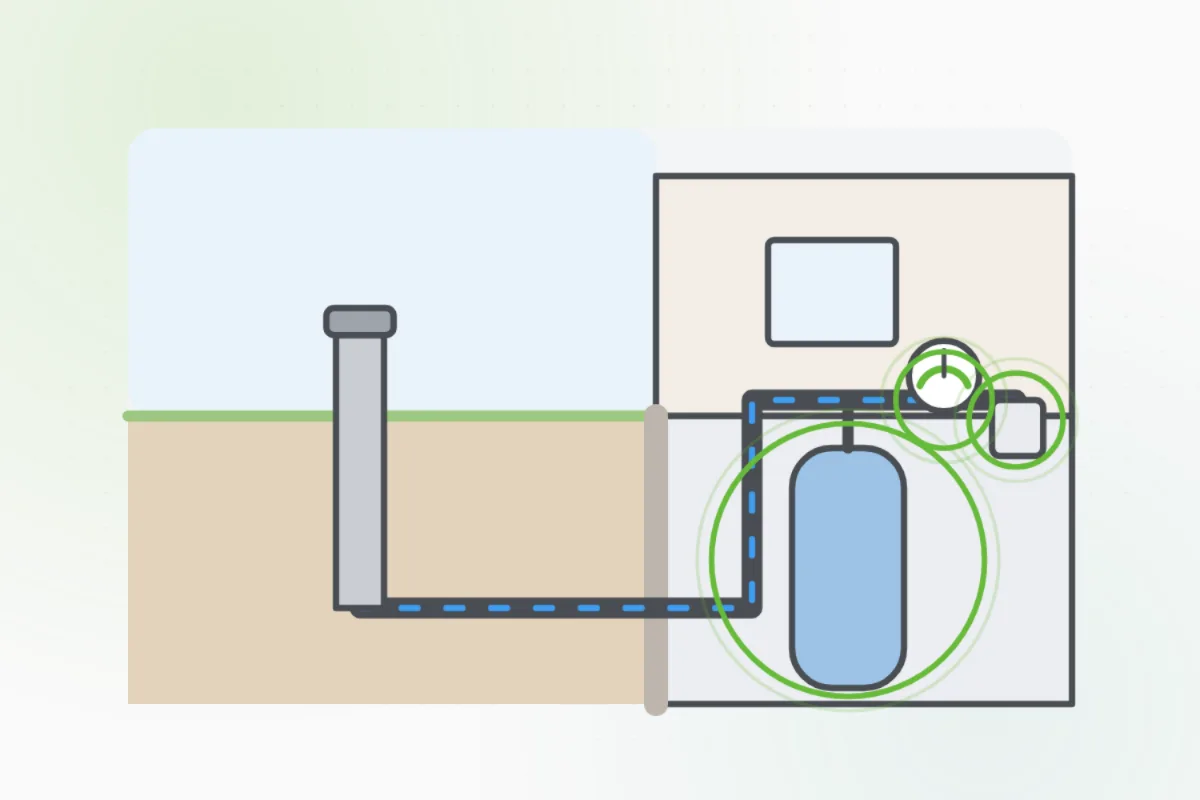
Rather have
a pro do it?