



What’s involvedWater heater
The water heater's relief valve: what's involved
What the valve does, what a plumber checks when they test it, what to have ready, and when to call now. No hands-on steps.
- 4 parts
- Every step animated
What’s involved
No hands-on steps here: what the job is, what a pro does, and what to have ready.
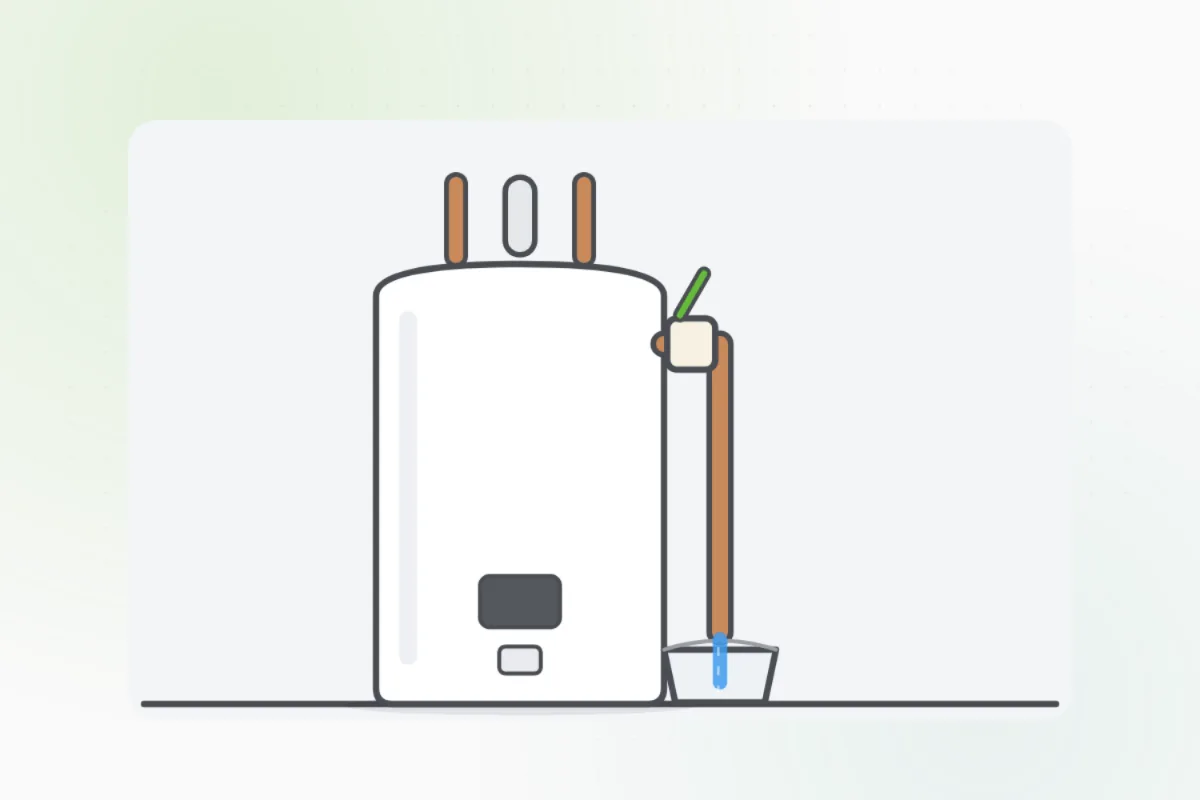
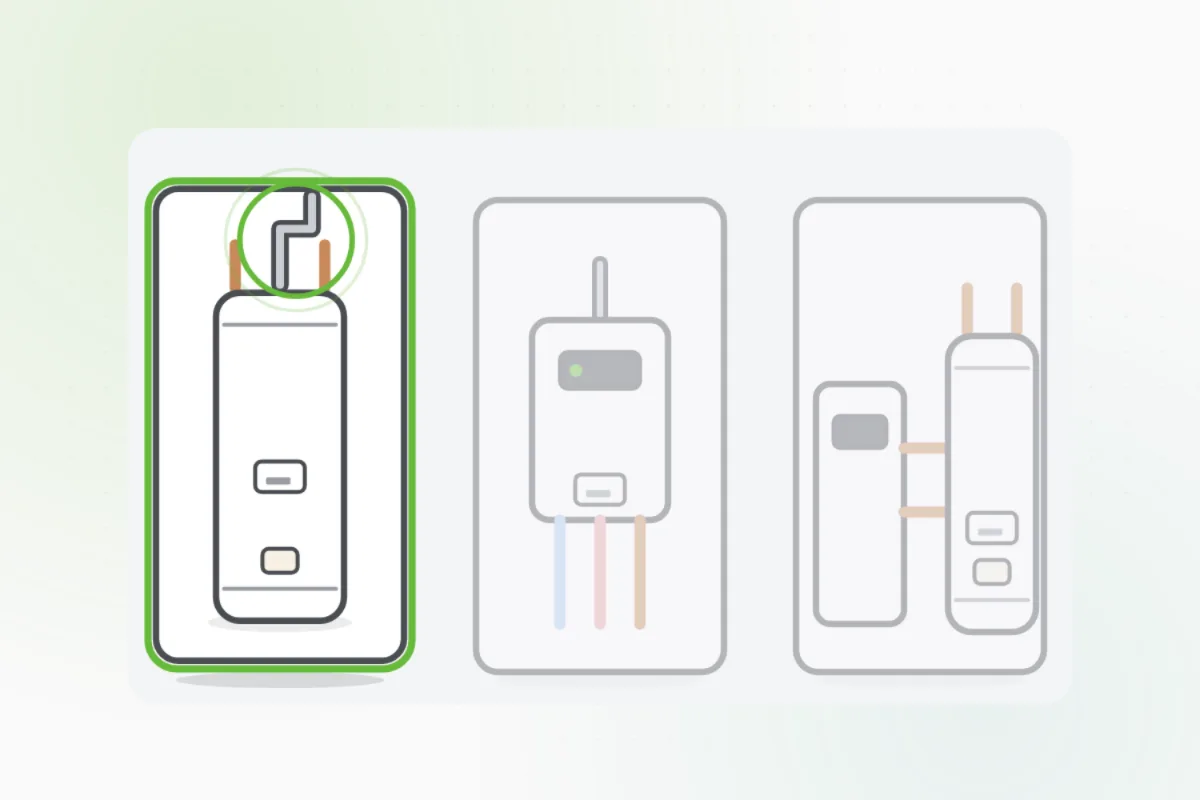
The relief valve is the small lever near the top of the tank, with a pipe running down the tank's side. It opens by itself if the water gets too hot or the pressure too high.
They set a bucket under the pipe, lift the lever for a moment, check that hot water flows out and stops, and that the valve closes again without a drip.
Clear the space round the heater so the pipe's end can be seen, and know roughly how old the heater is.
Water dripping from the pipe, a puddle at its end, or a heater that hisses or rumbles: call now.
Don't lift the lever yourself: the water is scalding, and an old valve may not close again.
What you need
- Clear space round the water heater
Call a pro if
- Water drips from the relief valve's pipe
- The pipe's end is missing, capped or blocked
- The valve has never been tested

Handyman says: That needs a plumber. I'll find one.
Free for every home. Handyman asks a few questions, then books a pro it trusts.
More water and plumbing guides
See all 83
Rather have
a pro do it?