



DIY guideWater heater
Check the thermal expansion tank
Knock on the small tank by the water heater, check its air side with a tire gauge, and look for rust or drips. A failed one lets the pressure spike each time the water heats.
- 15 to 20 min
- 8 steps
- Every step animated
8 steps
Tap a step to watch it again.
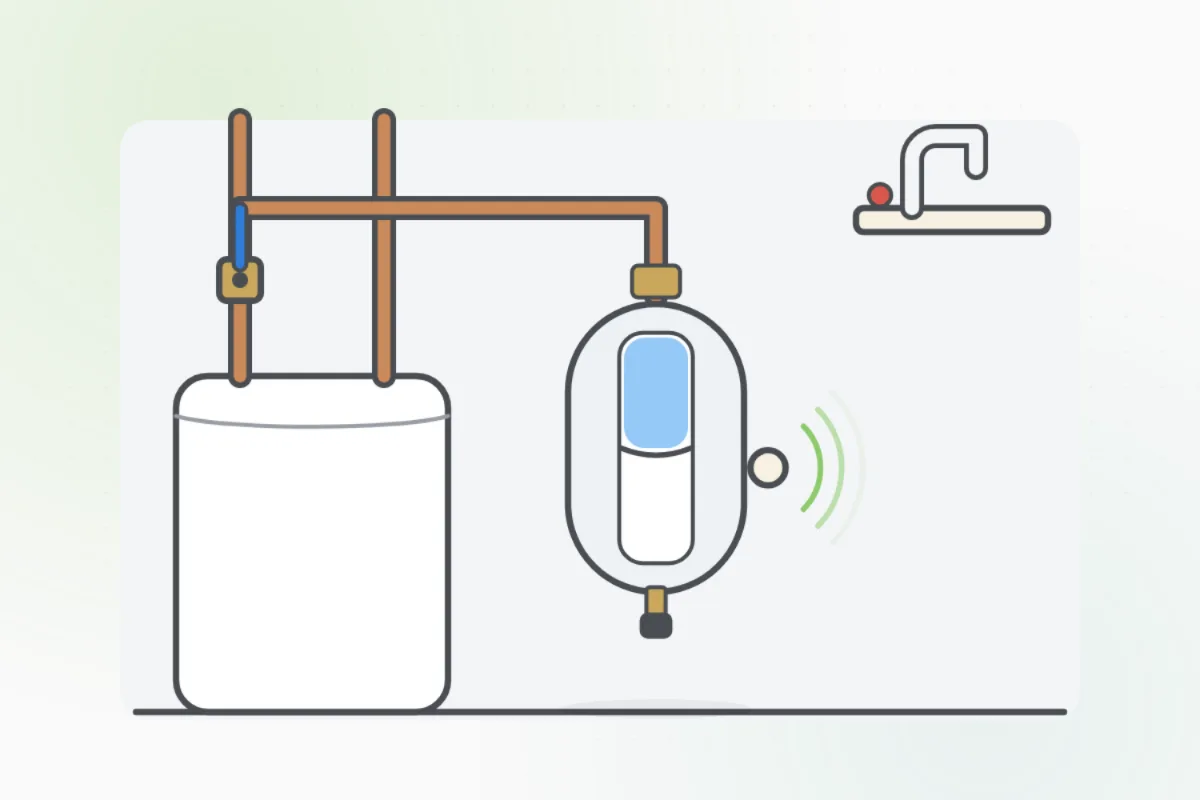
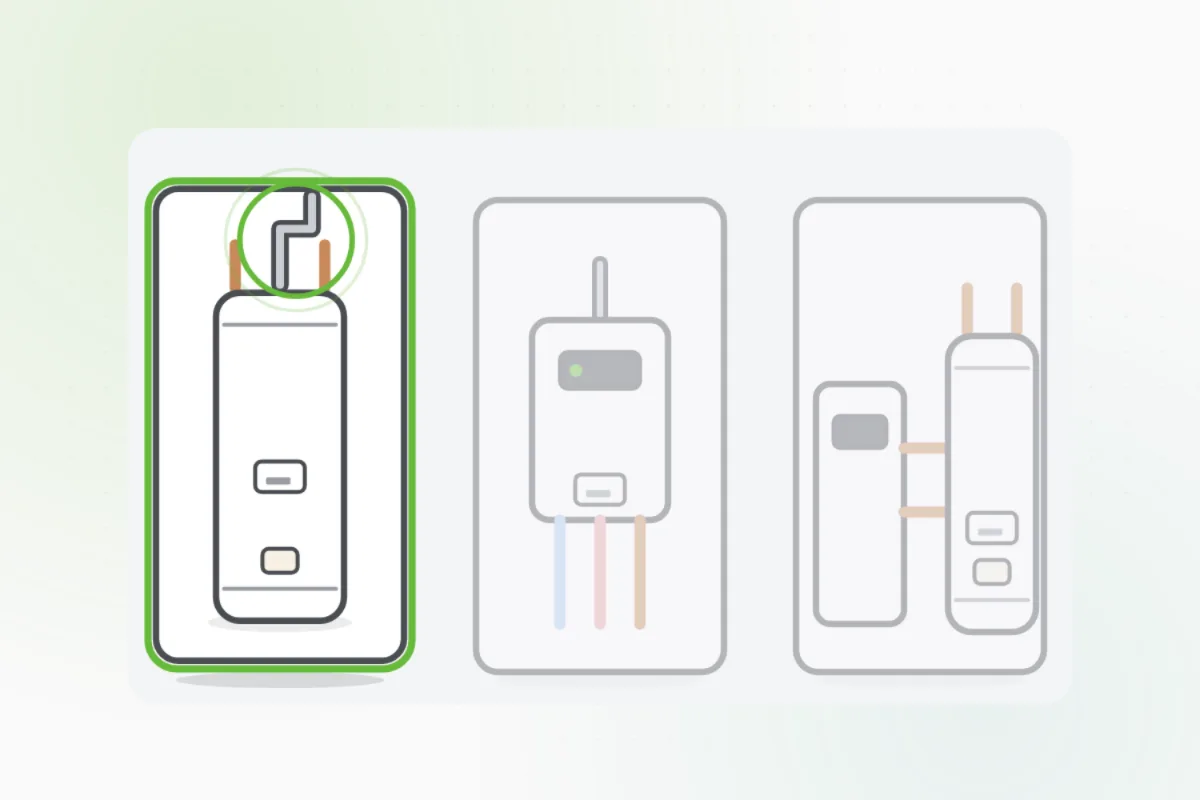
Find the small round tank on the cold pipe beside or above the water heater.
Look over the tank and the joint above it for rust, a damp patch or drips.
Knock along it. The end away from the pipe should sound hollow, the end nearest it dull. Dull all over means it's full of water.
Close the cold water valve on the water heater, then open a hot tap until the water stops.
Take the cap off the valve on the tank's end and press a tire gauge on. It should read close to your home's water pressure: most homes read 40 to 60 psi.
If water comes out of that valve instead of air, the tank inside has failed.
Hold a rag over it: the water can be hot.Put the cap back, close the hot tap and open the cold valve. Check the joints for drips.
Water from the valve, a low reading, rust or a drip: ask Handyman for a plumber to recharge or replace the tank.
What you need
- A tire pressure gauge
- A rag
- Your home's water pressure, if you know it
Call a pro if
- Water comes out of the tank's air valve
- The air reading is low, or the tank sounds dull all over
- Rust or drips on the tank or its joint
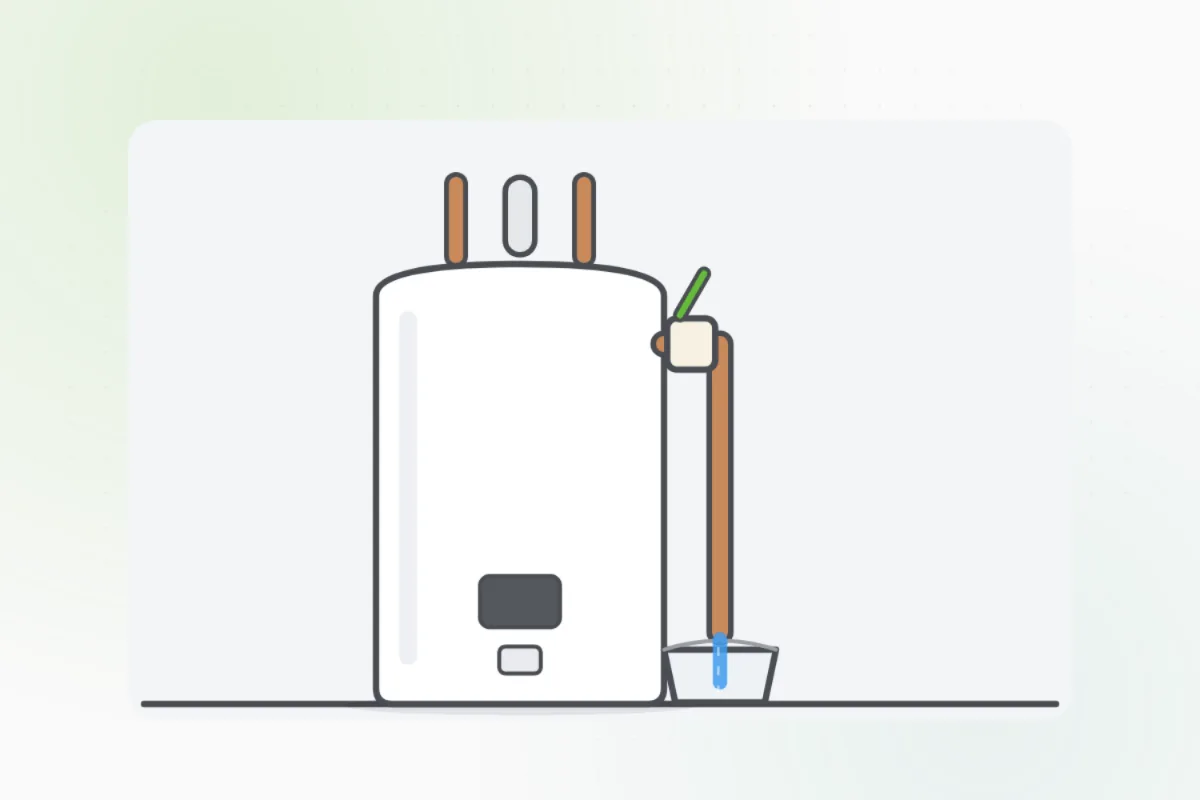
- The relief valve on the water heater drips

Handyman says: Tank failed? I'll find you a plumber.
Free for every home. Handyman asks a few questions, then books a pro it trusts.
More water and plumbing guides
See all 83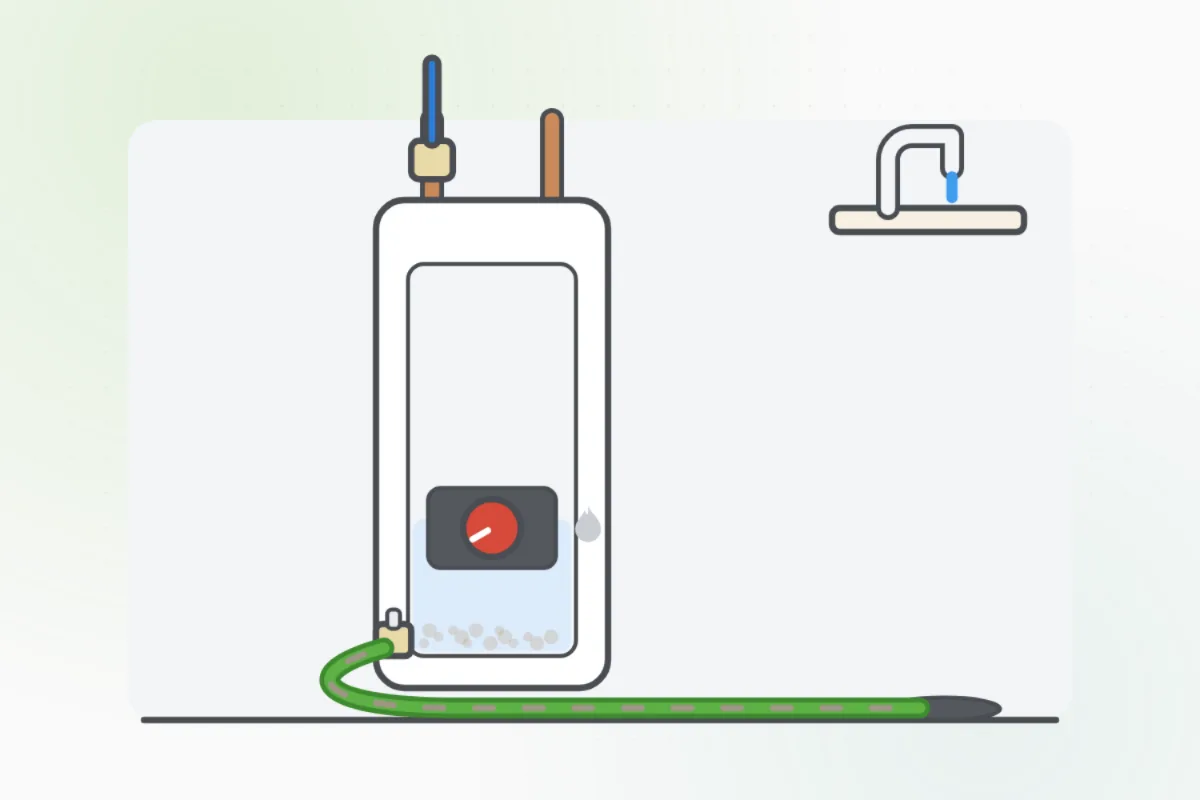
Rather have
a pro do it?