



What’s involvedFaucet
Replace a faucet (what's involved)
What replacing a faucet takes: the supply lines, the nuts that hold it from under the sink, and the drain's stopper, and what a plumber checks. No hands-on steps.
- 6 parts
- Every step animated
What’s involved
No hands-on steps here: what the job is, what a pro does, and what to have ready.
The old faucet's supply lines and the nuts that hold it are undone from under the sink. It lifts out, and the new one is set in on its seal and fastened from below.
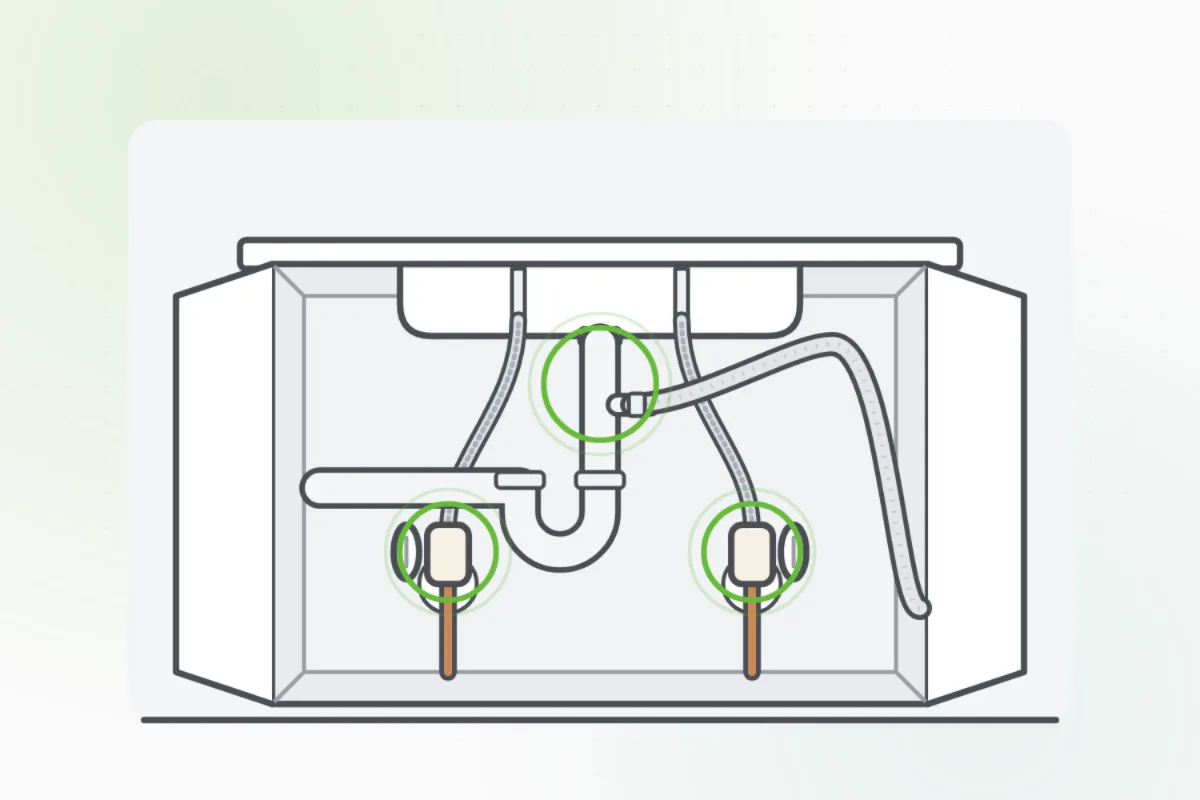
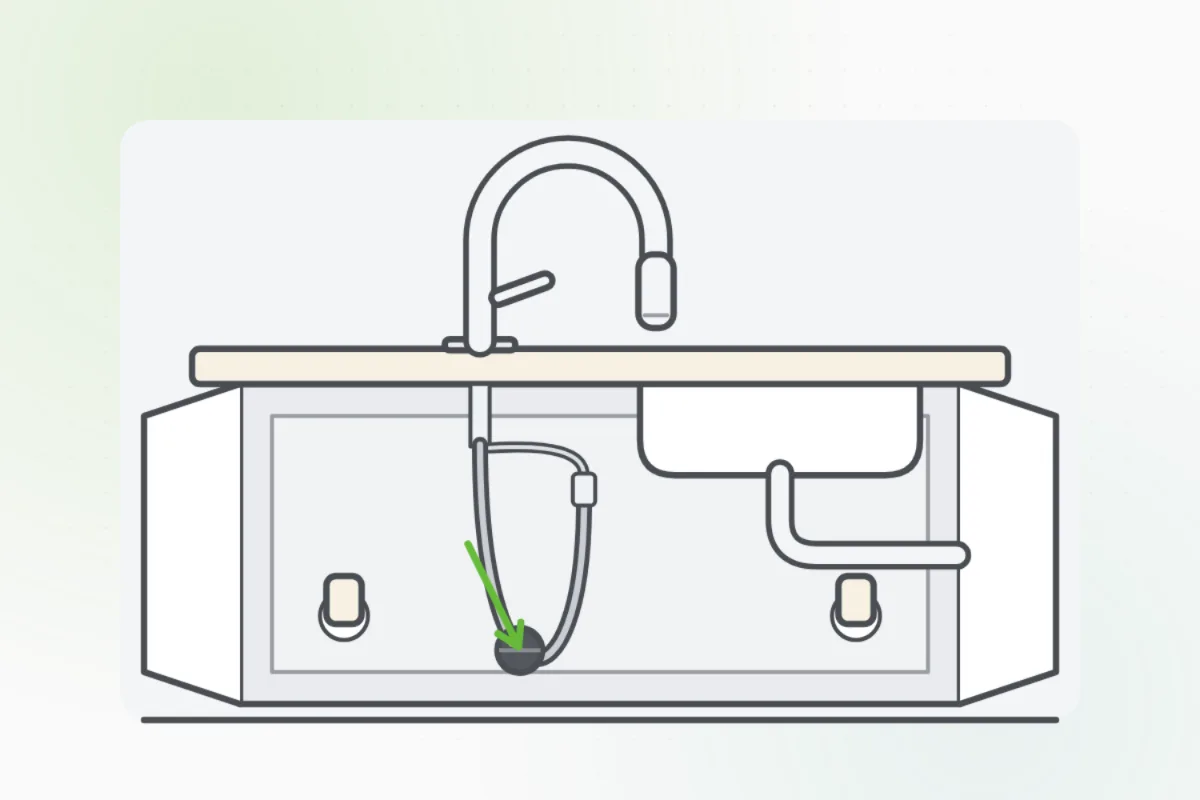
Look under: the two valves on the wall, the braided lines up to the faucet, the nuts under the counter, and the drain's stopper rod.
That the valves close fully. They fit new supply lines, connect the stopper and drain, then run the water and look for drips.
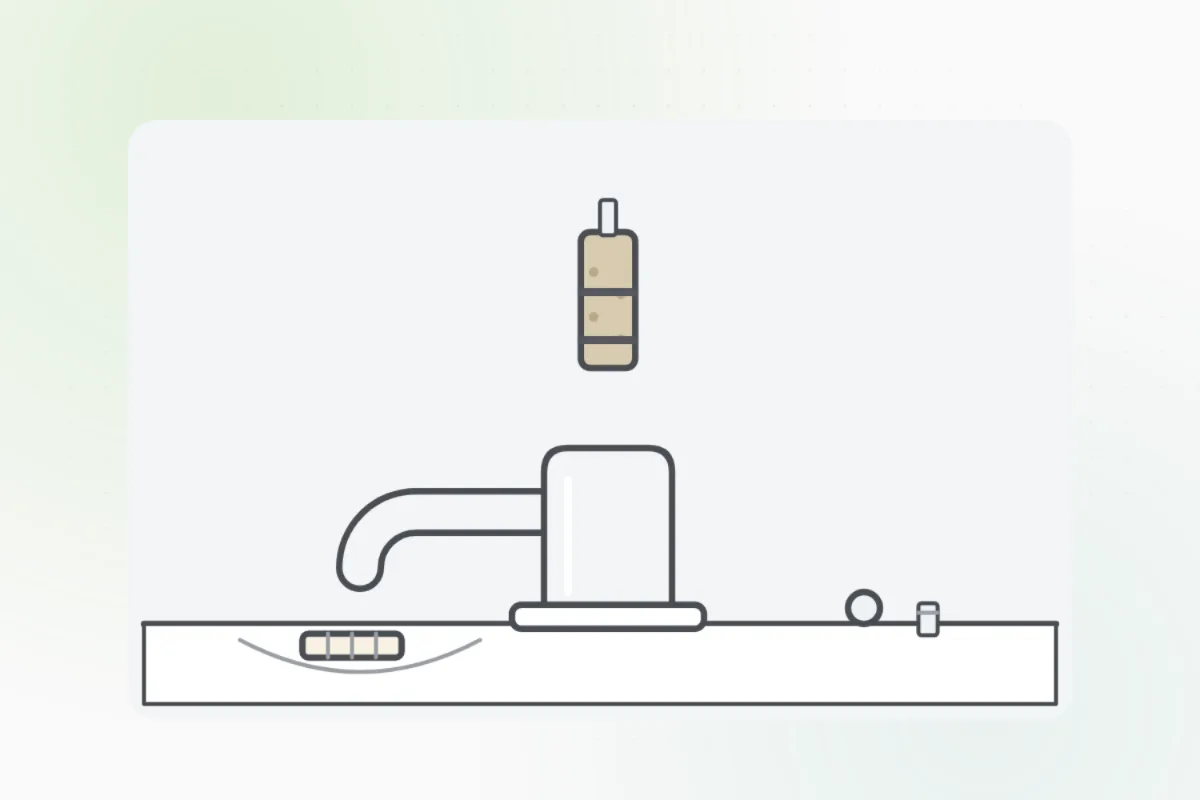
Count the holes in the sink or the counter, and choose a faucet made for that many, or one with a cover plate.
Empty the cabinet, have a towel and a bucket on hand, and know where the main water shutoff is in case a valve won't close.
Old valves can break when they're turned, and a loose nut leaks inside the cabinet. Ask Handyman for a plumber to fit it.
What you need
- The new faucet, made for your sink's holes
- A towel and a bucket
- An empty cabinet
Call a pro if
- You're replacing a faucet
- The valves under the sink are stiff, crusted or won't close
- Water drips inside the cabinet

Handyman says: I'll find a plumber to fit it.
Free for every home. Handyman asks a few questions, then books a pro it trusts.
More water and plumbing guides
See all 83
Rather have
a pro do it?