



What’s involvedEjector pump
Check the ejector basin's float and check valve: what's involved
What the sewage ejector does, the signs it needs a look, what a plumber does when they open it, and what to have ready. No hands-on steps: the sealed lid stays shut.
- 10 to 20 min
- 7 parts
- Every step animated
What’s involved
No hands-on steps here: what the job is, what a pro does, and what to have ready.
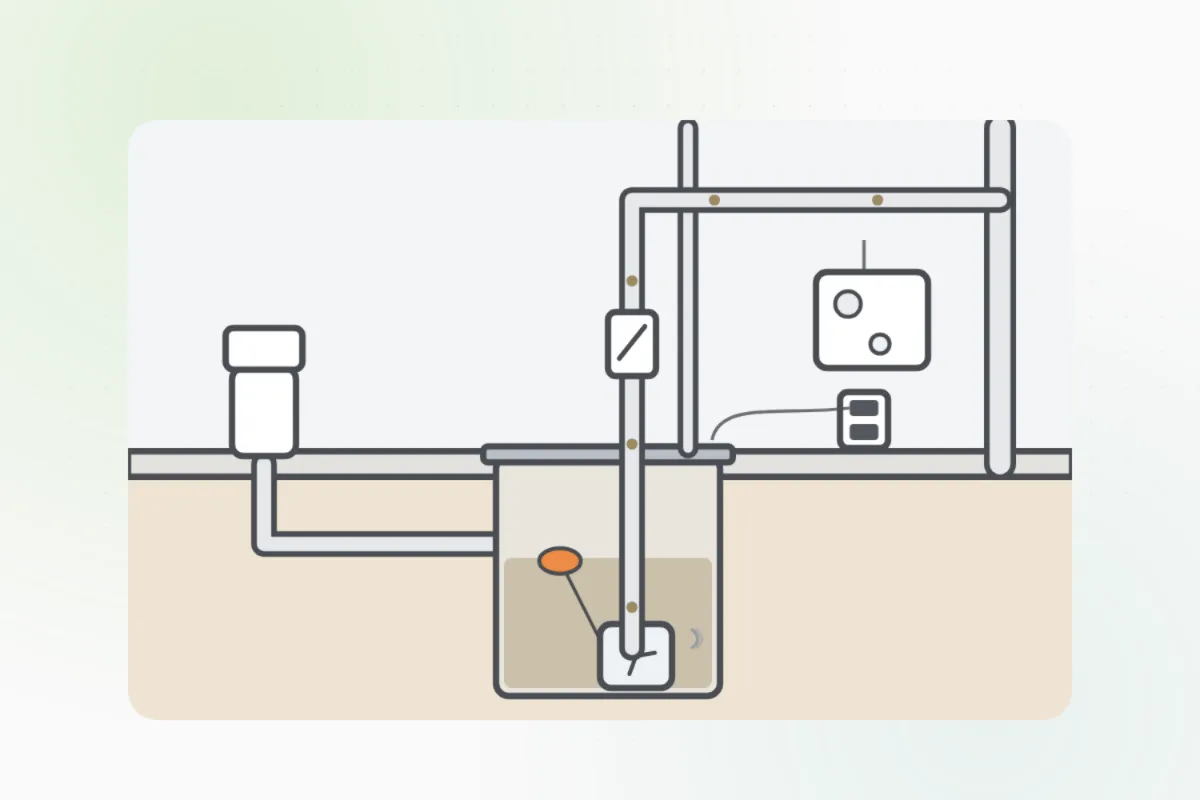
A basement toilet or sink lower than the sewer drains into a sealed basin. When a float rises, a pump lifts it up and out.
Find the sealed lid in the floor, the pipe out of it with its check valve, and the alarm box on the wall.
The lid keeps sewer gases in, and opening it is a plumber's job.
Never open the sealed lid yourself.The pump running nonstop, the alarm sounding, slow drains downstairs or a smell all mean it needs a check.
They unplug the pump, open the lid, check the float moves freely and the check valve closes, clean it, and seal it again.
Clear a path to the basin and its outlet, and don't use the basement toilet or sink until they're done.
Nonstop running, the alarm, or a smell: stop using water downstairs and ask Handyman for a plumber.
What you need
- Nothing: a plumber brings the tools
Call a pro if
- The pump runs nonstop or not at all
- The alarm sounds
- There's a sewage smell downstairs
- The basement toilet or sink drains slowly

Handyman says: Pump acting up? I'll find a plumber.
Free for every home. Handyman asks a few questions, then books a pro it trusts.
More water and plumbing guides
See all 83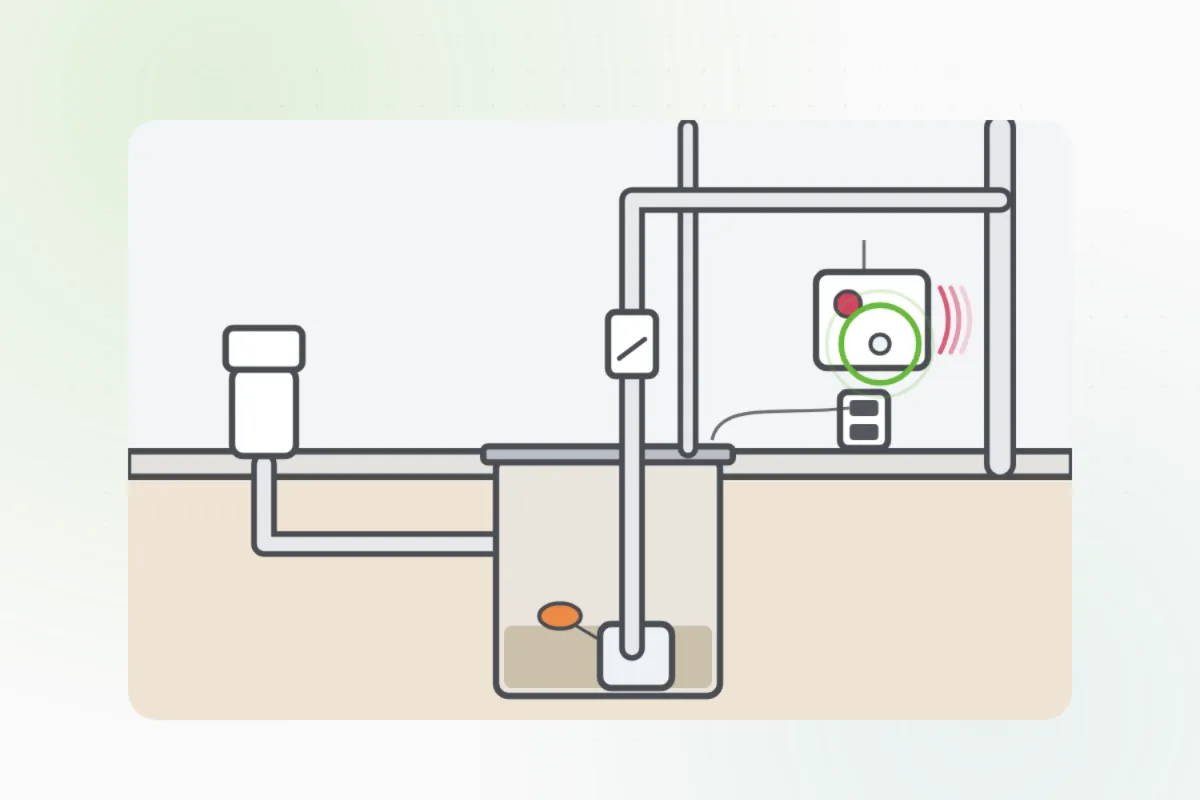

Rather have
a pro do it?