



DIY guideHeating system
What heats your house?
Find what makes the heat (a furnace, a boiler, a heat pump or electric) and how it reaches the rooms: vents, radiators or baseboards.
- 10 to 20 min
- 7 steps
- Every step animated
7 steps
Tap a step to watch it again.
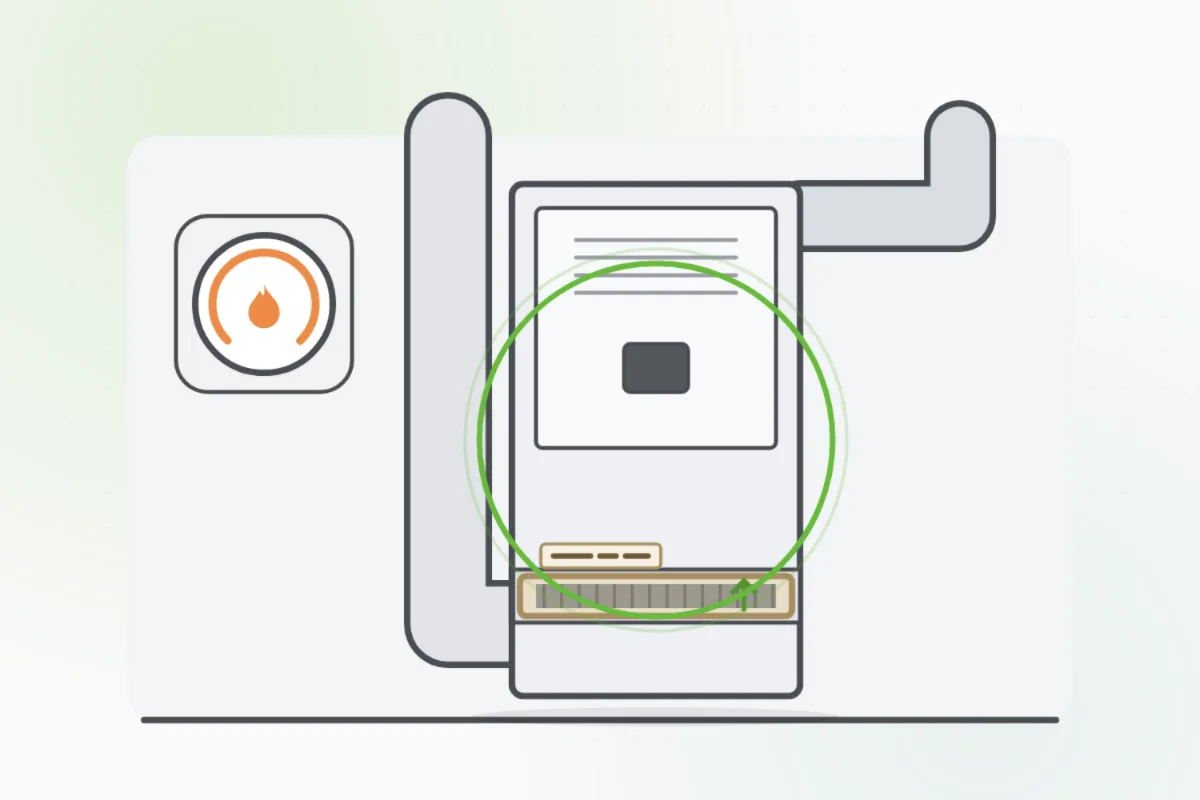
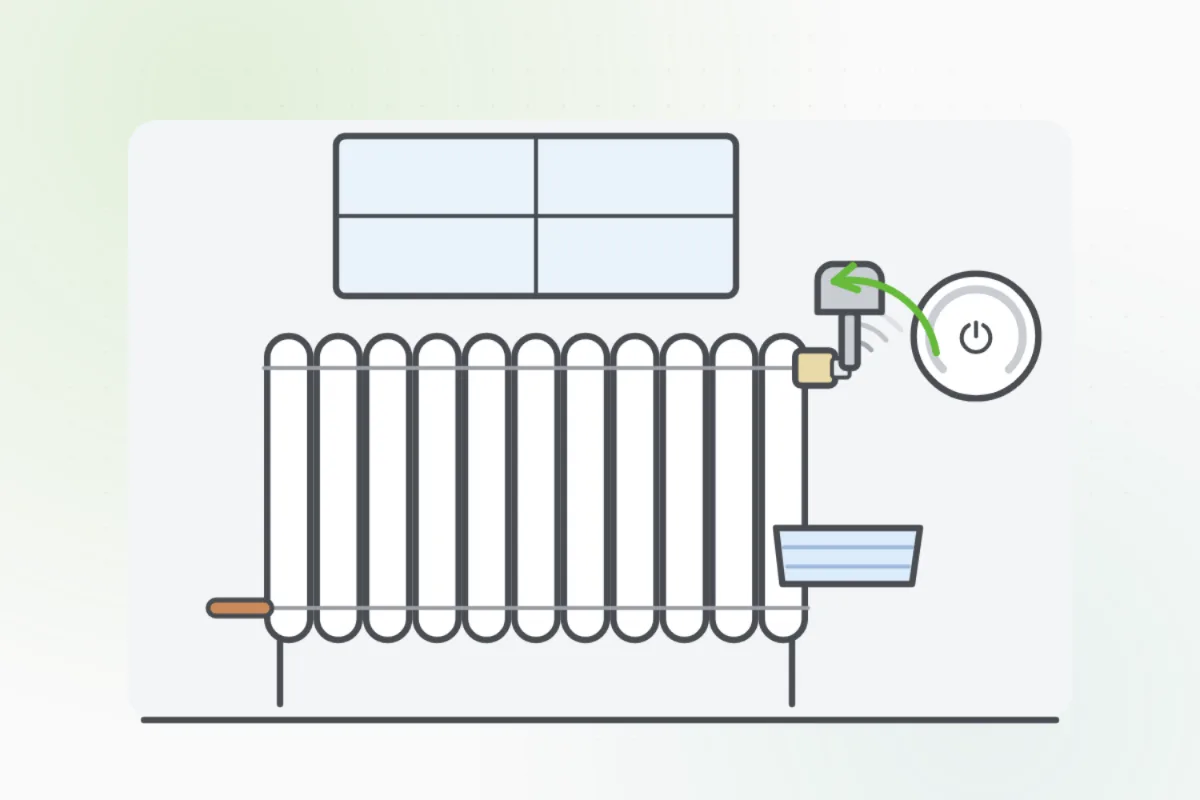
Vents in the floor or walls that blow air: forced air. Radiators or long baseboards under the windows: hot water or electric.
Follow the vents or the pipes to the basement, a closet or the attic. A furnace has big ducts; a boiler has pipes.
A meter on a pipe outside means gas. A big tank in the basement or the yard means oil or LP. No flue and no tank: electric.
A unit outside that runs in winter too, not just summer, is a heat pump. Many have a furnace as backup.
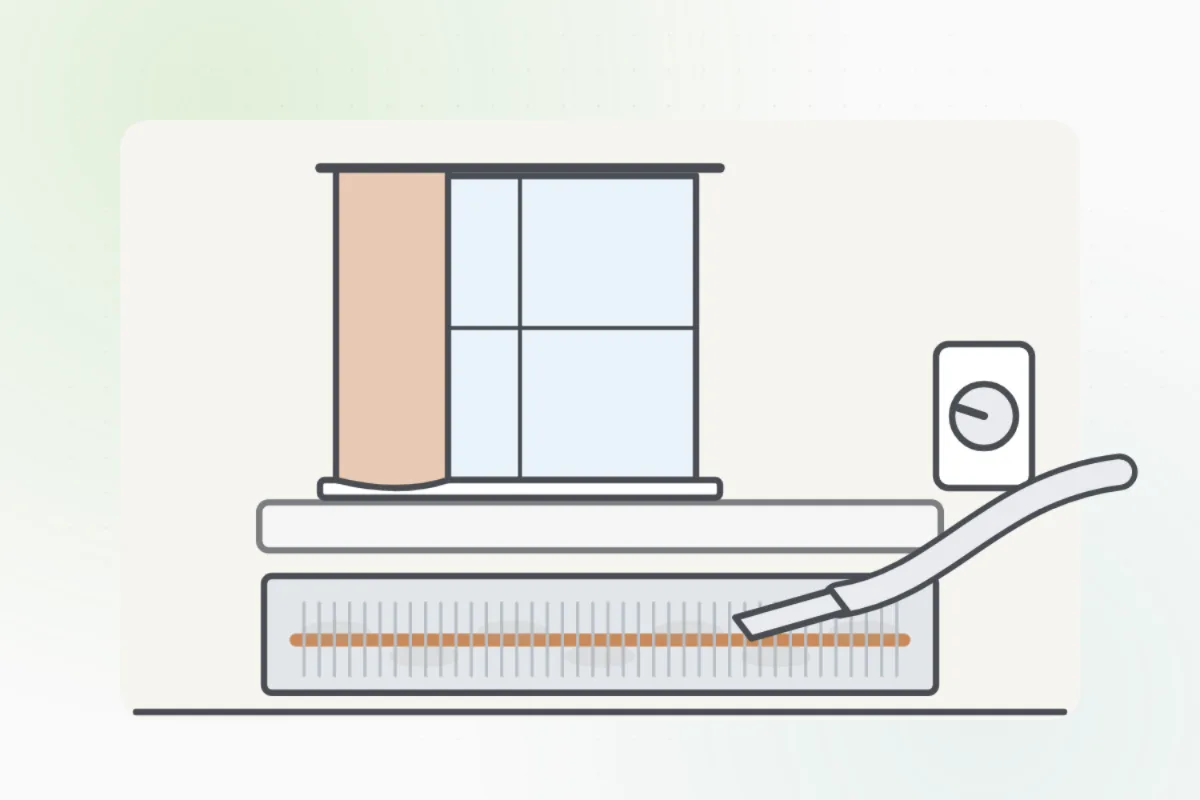
Hot-water baseboards have pipes and a boiler. Electric ones have no pipes, and a dial on the wall or the heater.
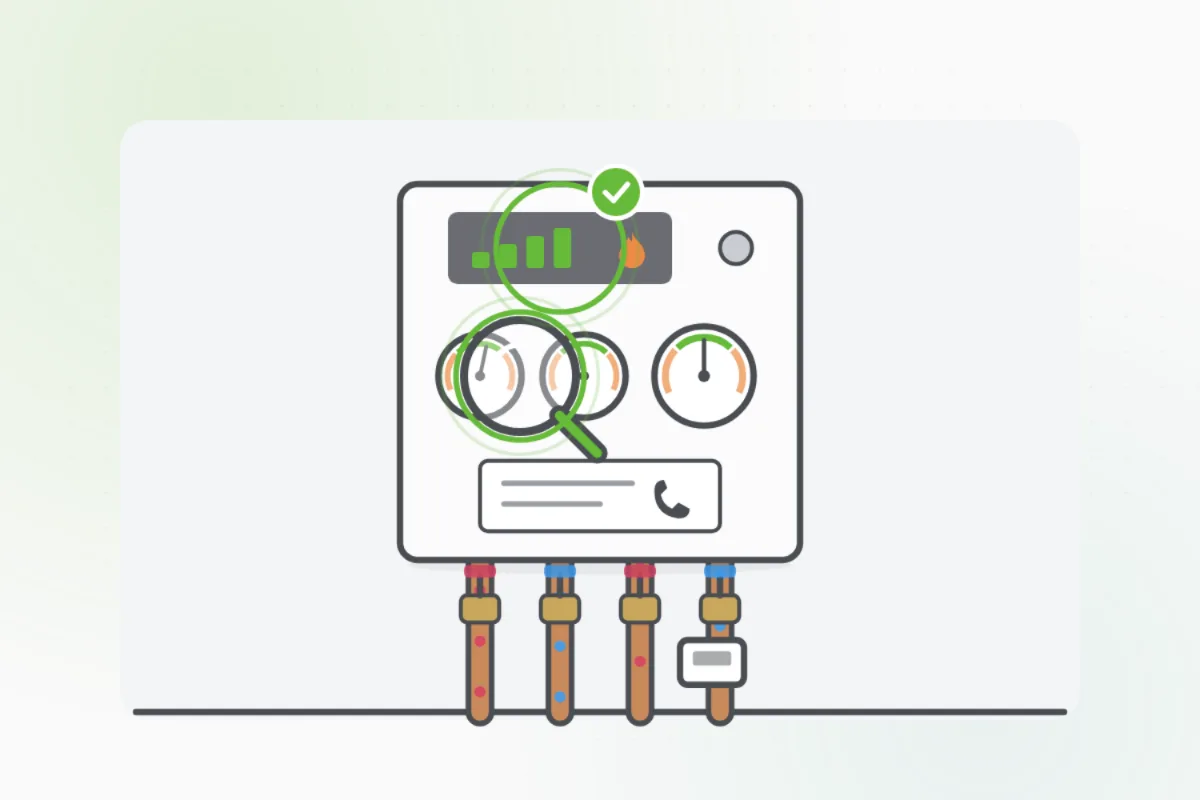
Note what it is and photograph its label. It's the first thing a pro asks.
Leave the furnace's panels, the burner and the boiler's covers shut. A gas or fuel smell: leave and call from outside. For a service or a fault, ask Handyman for a heating pro.
What you need
- A flashlight
- Your phone
Call a pro if
- No heat, or it's time for its yearly service
- A smell of gas or fuel: leave, and call from outside
- Soot, water or rust around it

Handyman says: Leave it shut. I'll find a heating pro.
Free for every home. Handyman asks a few questions, then books a pro it trusts.
More heating and air guides
See all 51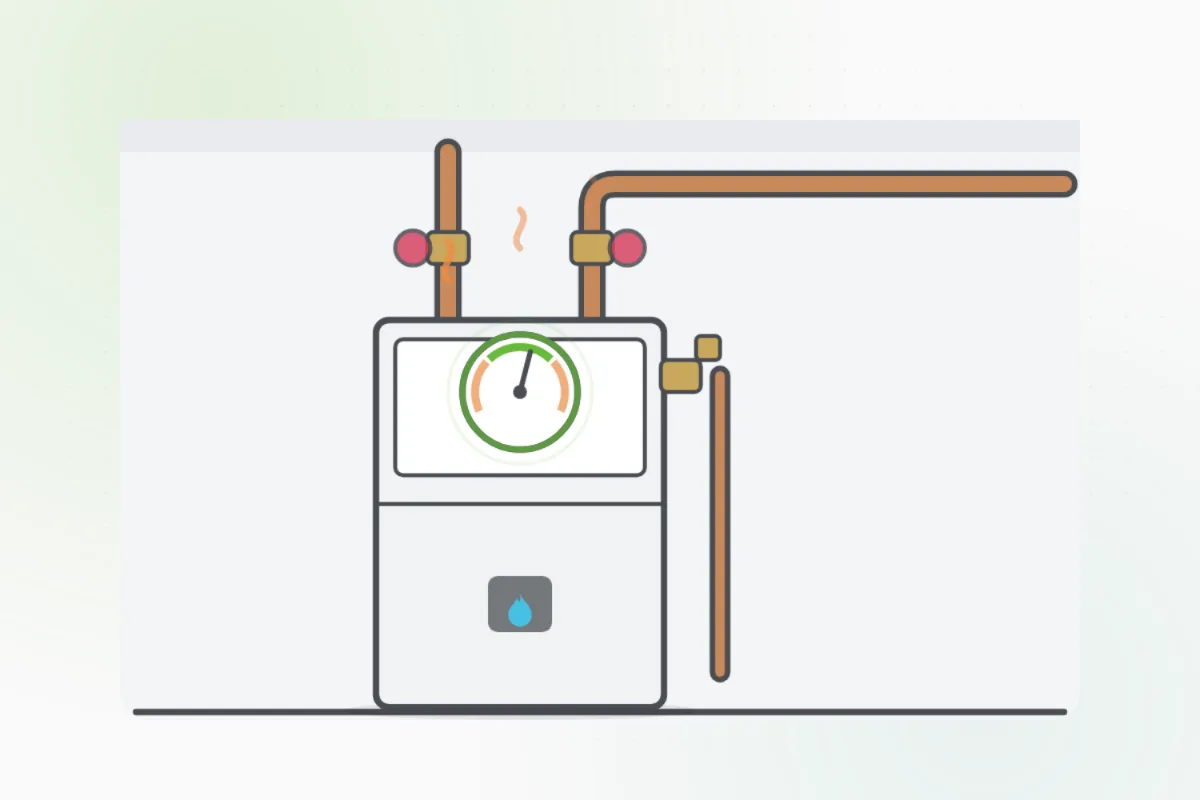
Rather have
a pro do it?