



What’s involvedHeating system
Your district heating unit: what's involved
What the unit and its display are, who owns it, what their engineer does, what to have ready and when to call. No hands-on steps.
- 6 parts
- Every step animated
What’s involved
No hands-on steps here: what the job is, what a pro does, and what to have ready.
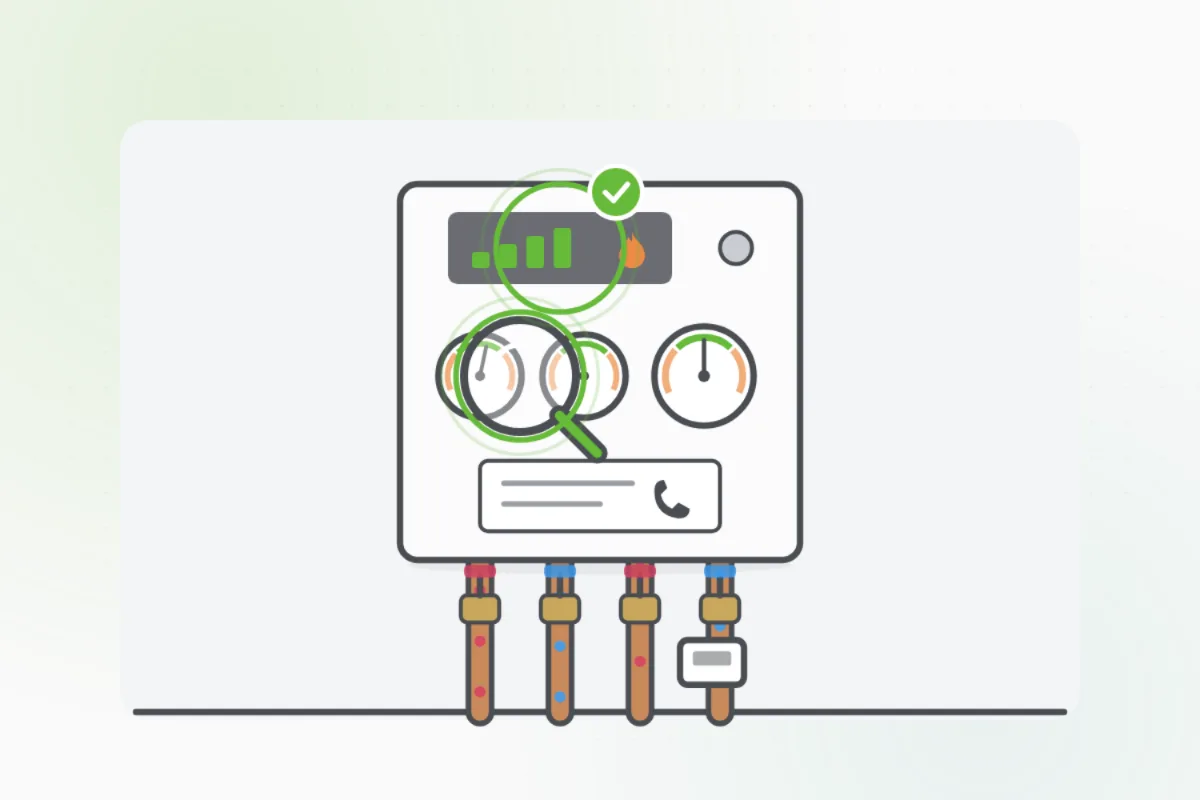
A box that takes hot water from a network outside your home and passes its heat to your heating and taps. There's no flame inside.
Its screen or gauges show the water's heat coming in and going out, its pressure, and the heat you've used. A warning light means it needs a look.
Usually the heat network or the building owns the unit and its meter. A sticker on it, or the bill, says who to call.
They read the fault, check its valves and strainers, and set it up again. Its cover stays on for everyone else.
Photograph the display, any warning, and the sticker with the unit's number and the network's phone.
No heat or hot water, a warning light, water dripping, or the pressure out of range: call the number on the unit.
Don't open the unit or turn its valves: the water inside is very hot and under pressure.
What you need
- Your phone, for photos
- The heat bill or the sticker on the unit
Call a pro if
- No heat or hot water
- A warning light or a fault on the display
- Water dripping from the unit or its pipes
- The pressure is out of its range

Handyman says: Call the number on the unit.
Free for every home. Handyman asks a few questions, then books a pro it trusts.
More heating and air guides
See all 51
Rather have
a pro do it?