



DIY guideLeaks and drips
Walk the house for mould and hidden damp
Look under the sinks, in the closets, behind furniture and at the windows, and follow your nose. Look only: finding it is yours, removing it is a pro's.
- 30 min to 1 hr
- 8 steps
- Every step animated
8 steps
Tap a step to watch it again.
Walk room to room with a flashlight. Start with the kitchen, the bathrooms, the laundry and the basement.
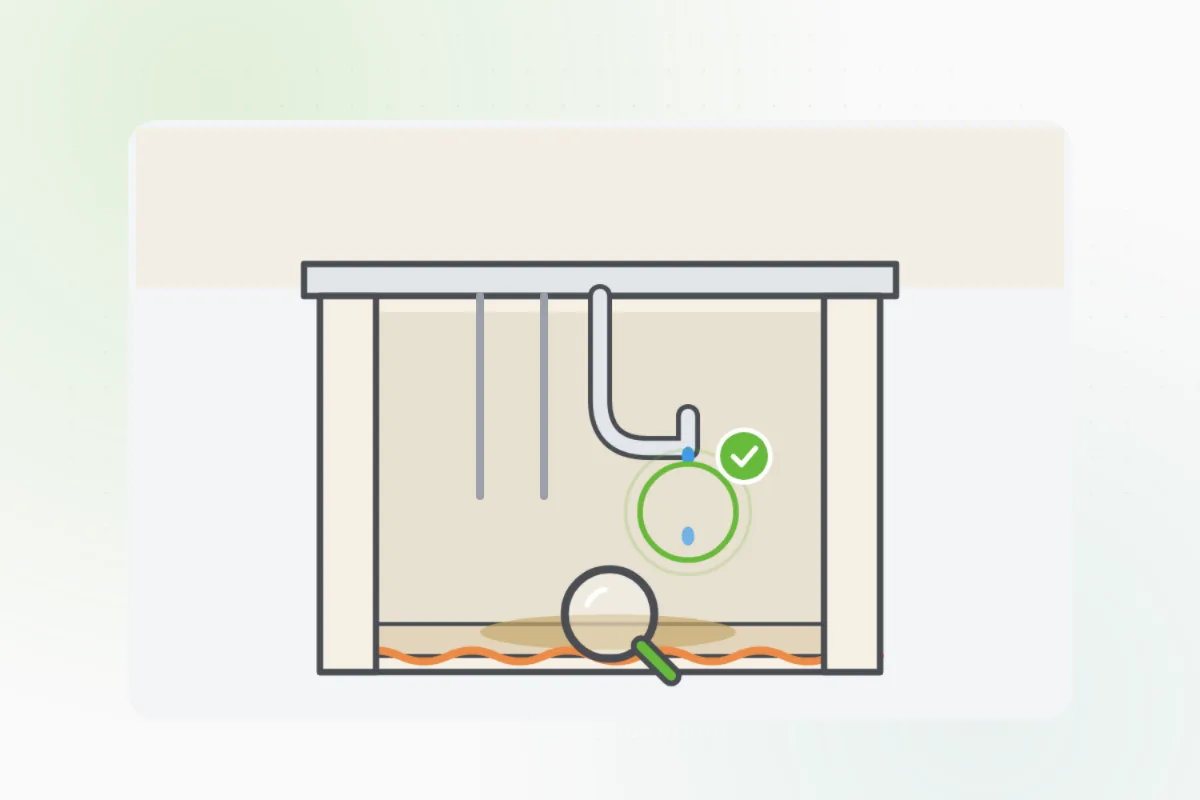
Open each sink cabinet. Look for stains, a swollen or soft floor, drips on the pipes, and dark spots.
Push the clothes aside in closets on outside walls. Look low in the back corners for spots, and sniff.
Pull couches, beds and dressers a little away from outside walls, and look at the wall and baseboard behind them.
Get help with anything heavy, and lift with your legs.Look at the sills and the bottom of the frames for water, black spots or peeling paint.
A musty, earthy smell means damp somewhere, even where nothing shows. Note where it's strongest.
Take a close photo of each spot, with something beside it for size, and note the room.
Don't scrub, scrape or spray mould, and don't open a wall to look. Spots bigger than your hand, a musty smell you can't trace, or soft walls or floors: ask Handyman for a plumber to find the water, then a mould pro.
What you need
- A flashlight
- Your phone, for photos
Call a pro if
- Mould bigger than your hand, or coming back
- A musty smell you can't trace
- Soft, stained or swollen walls or floors

Handyman says: Mould? Don't touch it. I'll find a pro.
Free for every home. Handyman asks a few questions, then books a pro it trusts.
More water and plumbing guides
See all 83

Rather have
a pro do it?