



DIY guidePipes
Find and protect the pipes that can freeze
Find the pipes in cold spots, sleeve them in foam, and check any heat cable before the cold arrives.
- 30 min to 1½ hr
- 7 steps
- Every step animated
7 steps
Tap a step to watch it again.
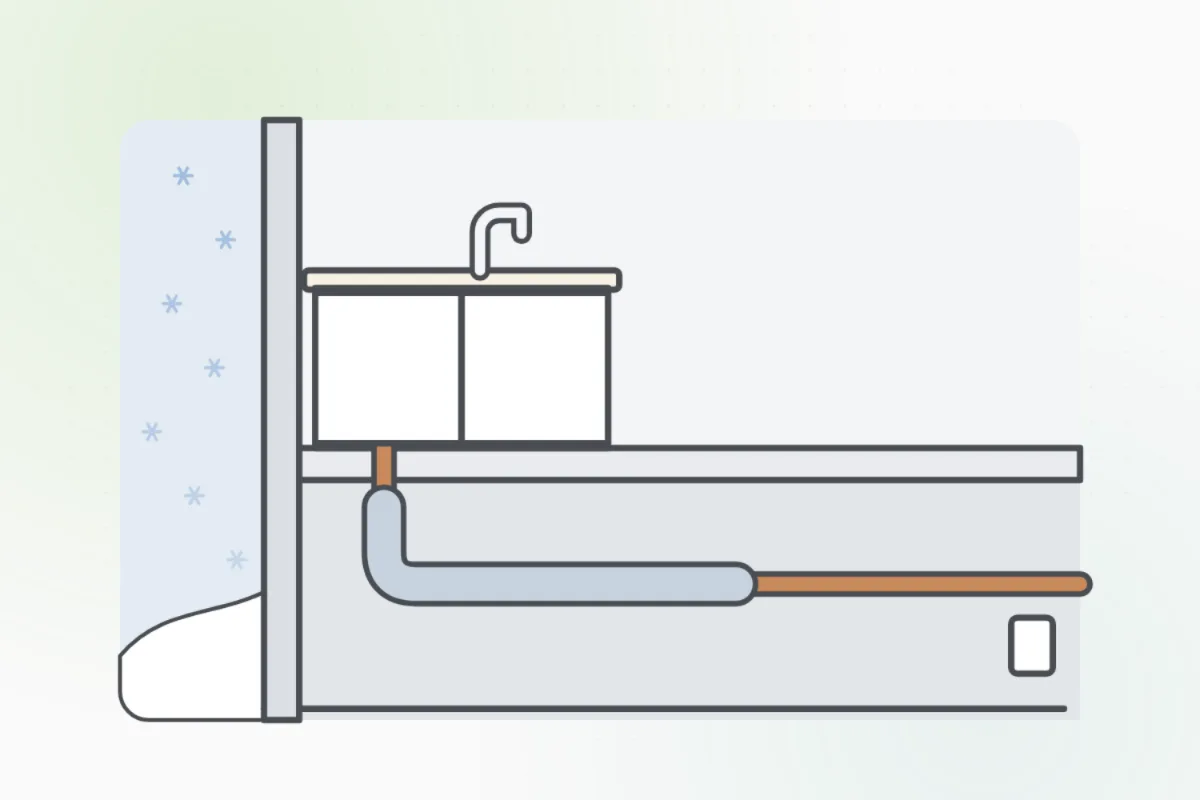
Look for pipes along outside walls, in a crawlspace, garage, attic or any unheated room, and under sinks on outside walls.
Note how thick each pipe is and how long the run is, so the foam sleeves fit snugly.
Open each sleeve along its slit, press it over the pipe and close it. Butt the ends tight at corners and joints.
Wrap tape round every seam and joint so the sleeves stay closed.
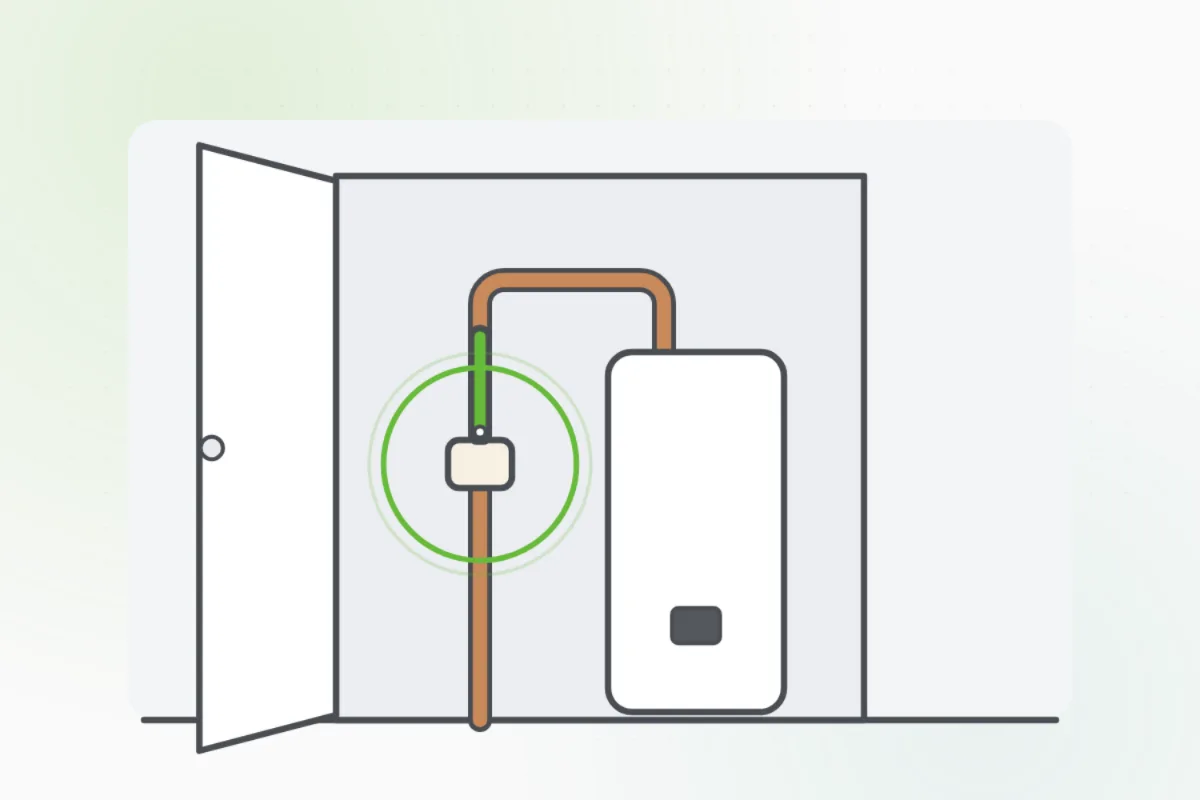
If a pipe has a heat cable, check that it's plugged in, its light is on if it has one, and the cable isn't cracked, burnt or kinked.
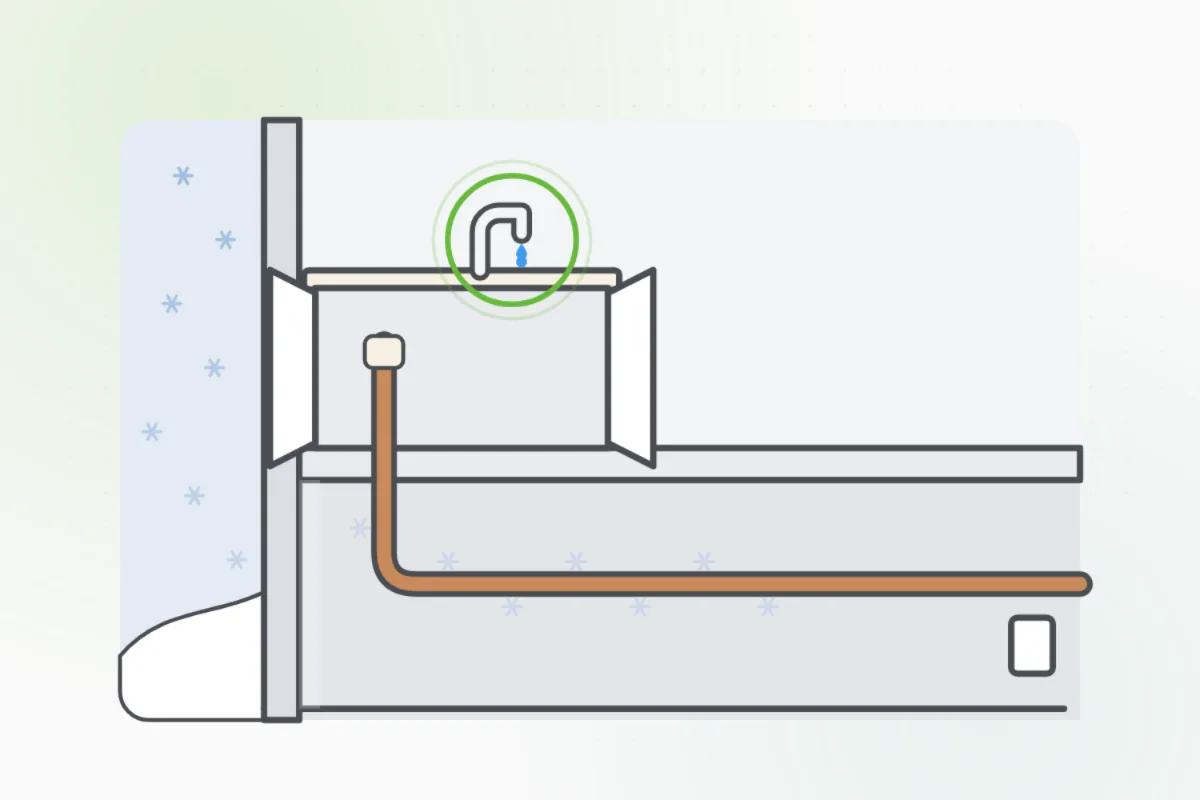
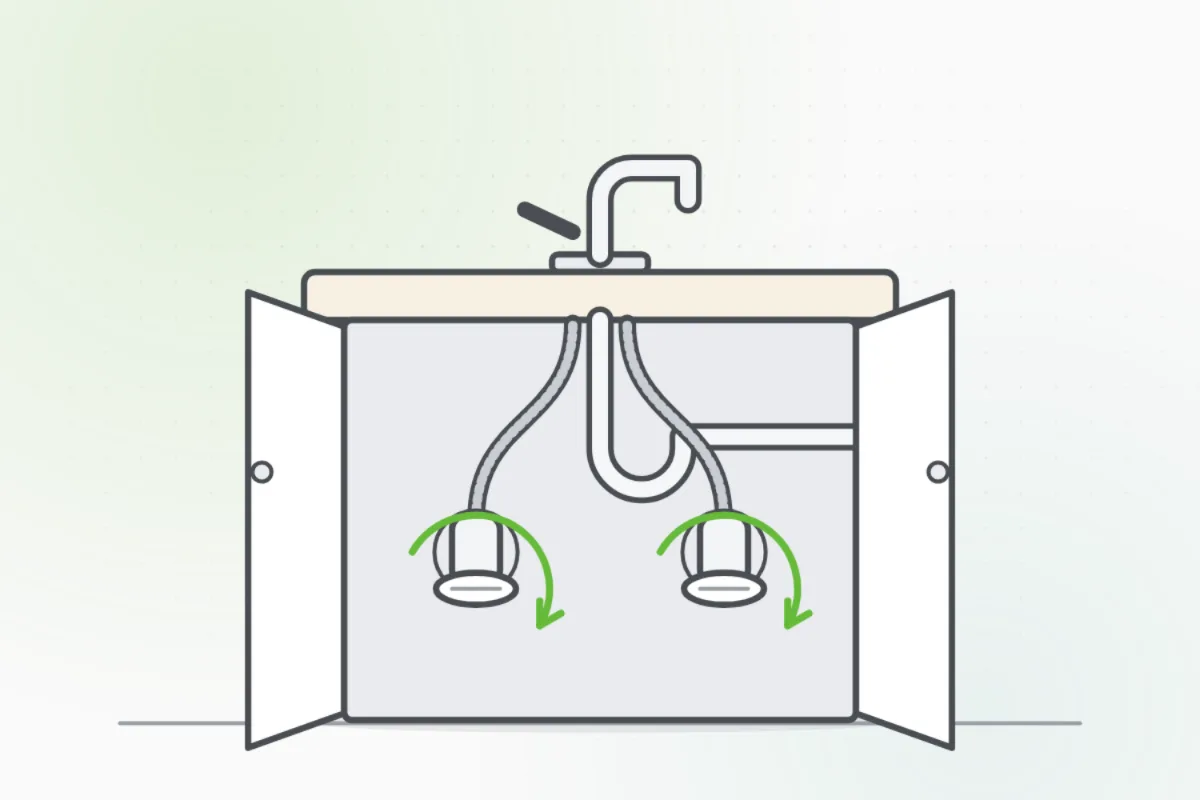
Don't cover a heat cable with foam unless its maker says you can.When it's bitterly cold, open the cabinet doors under sinks on outside walls, and let a tap there drip.
A cracked or burnt cable, one wired into a box instead of plugged in, or a pipe that has frozen before: ask Handyman for an electrician or a plumber.
What you need
- Foam pipe sleeves to fit your pipes
- Tape
- A tape measure
- A flashlight
Call a pro if
- A heat cable is cracked, burnt, or wired in rather than plugged in
- A pipe has frozen or split before
- A pipe runs where you can't reach it, inside a wall or a ceiling

Handyman says: Damaged cable? I'll find an electrician.
Free for every home. Handyman asks a few questions, then books a pro it trusts.
More water and plumbing guides
See all 83
Rather have
a pro do it?