



What’s involvedCommercial kitchen
Under-sink grease trap: what's involved
What an under-sink grease trap is, what keeps it working, what cleaning it involves and who does it, and why an in-ground interceptor is always a pump-out.
- 10 to 15 min
- 7 parts
- Every step animated
What’s involved
No hands-on steps here: what the job is, what a pro does, and what to have ready.
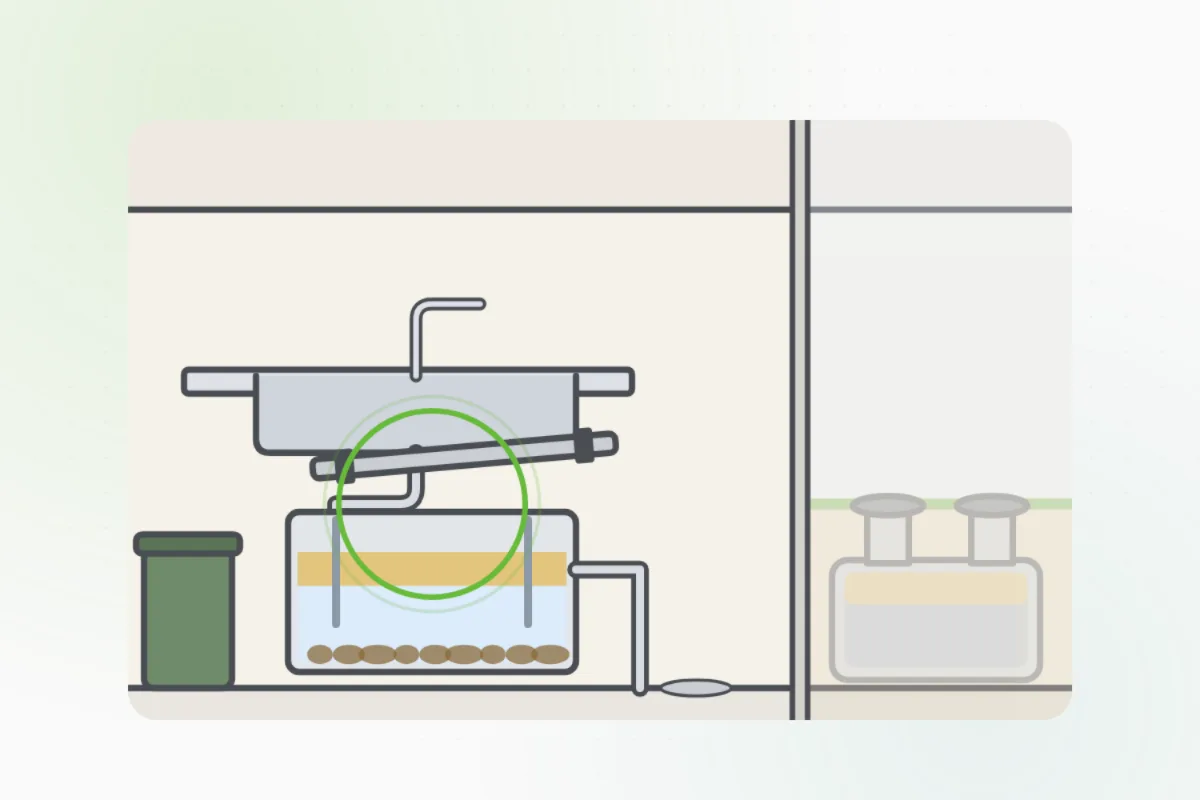
A box under or beside the sink that catches grease before it reaches the drain. Grease floats up, food sinks, and the water flows on.
Every day, staff scrape plates into the trash, keep strainers in the sink drains and never pour grease or oil down.
Opening its lid, skimming off the grease and scooping out the food on the bottom, then checking its baffles and lid seal. Trained staff or a grease service do it, on the schedule your city or its maker sets.
Slow sinks, a bad smell, or grease showing at the floor drain mean it's full or overdue.
A grease service cleans it, hauls the waste away properly and leaves a record. Keep those records: inspectors ask for them.
Know where it is, keep the way to it clear, and have the cleaning log handy.
A big tank outside or under the floor with a heavy lid is an interceptor. It's a pump-out by a licensed hauler.
Never open an in-ground lid: its gases and the drop can kill.
What you need
- The cleaning log
- The grease service's number
Call a pro if
- Sinks drain slowly or back up
- A bad smell from the drains
- Grease shows at the floor drain
- It's due, or overdue, for cleaning

Handyman says: In the ground? I'll book a pump-out.
Free for every home. Handyman asks a few questions, then books a pro it trusts.
More appliances guides
See all 34


Rather have
a pro do it?